Are electric scooters safe? What decides the risk and how to lower it
An electric scooter can be a safe way to get around, but the risk is real and it depends on choices you control: the scooter, the gear, the speed and the charging.
Published Nov 1, 20267 min read
SAFE
The short answer
Are electric scooters safe? They can be, when you choose a well built scooter tested to UL 2272, wear a helmet, ride at a speed that suits your skill and the road, follow local rules and charge the battery with care. The risk is real: the US Consumer Product Safety Commission (CPSC) says its latest report finds emergency room treated injuries and deaths linked to micromobility products are increasing. Most of what lowers that risk is in your hands, before and during every ride.
Pick a scooter tested to UL 2272, with two good brakes, lights and tires that suit your roads.
Wear a helmet every ride, and stay within the maker’s weight and age limits.
Speed, skill and road surface drive most falls. Start slow and learn the scooter in an empty lot.
Battery safety matters off the scooter too: the maker’s charger only, and never charge unattended.
What the official data says
The honest answer starts with the numbers, and the trend is not good. The CPSC, the federal agency that tracks product injuries, says on its micromobility information page that its latest report finds emergency room treated injuries and deaths associated with electric scooters, e-bikes and hoverboards are increasing. That report covers 2017 to 2023.
That does not mean every ride is dangerous. It means the risk is real and worth managing. Four things shape it: the scooter, the rider, the road and the battery. You control more of them than you might think.
The scooter: what to look for
A safer ride starts with a scooter built and tested to a recognized standard. CPSC advises using devices and batteries designed and made to meet the applicable voluntary safety standards, with certification to show it. For electric scooters that standard is UL 2272, which tests the battery, charger and drive system together for fire and electrical hazards. Our guide to UL 2272, UL 2849 and UL 2271 shows how to check a listing.
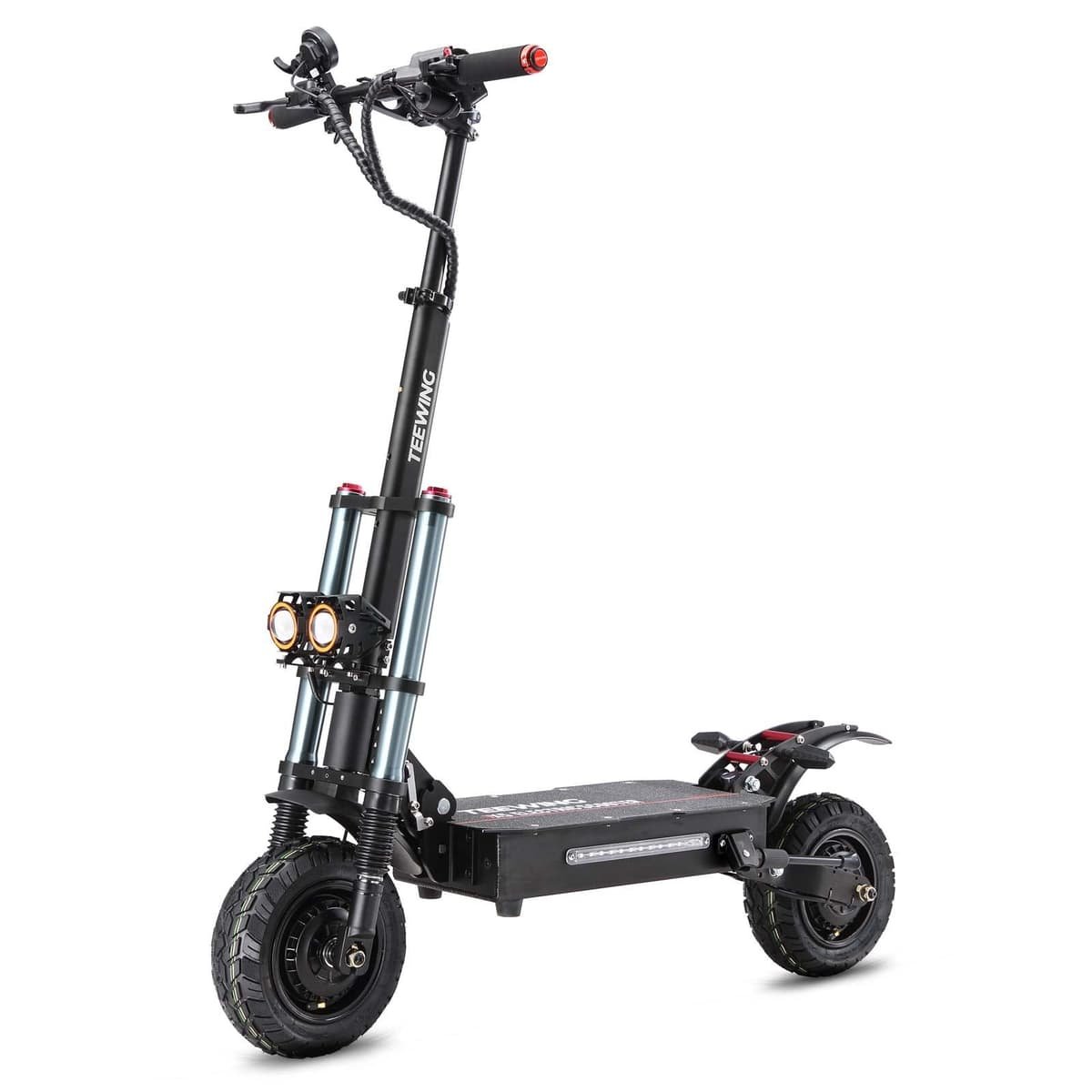
Brakes. Two independent brakes, ideally one on each wheel. Segway pairs a front disc with a rear electronic brake on the Segway F3. Our sibling guide on drum vs disc brakes explains the trade offs, and the guide to regenerative braking covers the motor brake.
Tires. Small, hard wheels catch on cracks and potholes. Larger air-filled or self-sealing tires ride over them more calmly. Segway lists 10 inch self-sealing tubeless tires on the F3 and 10 inch tubeless tires on the Segway E2 Pro. See electric scooter wheel sizes.
Lights and signals. A headlight, a taillight that brightens when you brake, and ideally turn signals. Segway lists front and rear turn signals on the E2 Pro.
Traction control. Segway lists TCS on both the F3 and the E2 Pro, which helps on slippery surfaces.
A weight limit above your weight with gear. Segway rates both the F3 and the E2 Pro for 265 lbs, and Hiboy rates the Hiboy S2 MAX for 220 lbs.
Scooters whose makers list UL 2272: Segway F3 and E2 Pro, Hiboy S2 MAX, S2 Pro and S2 Nova, DriveTron DT01, NANROBOT C1 and NANROBOT D4+MAX
Maker figures, checked September 2026. Real range and speed depend on rider weight, terrain, temperature and riding mode.
Match the scooter to the rider. CPSC advises following the maker’s instructions and observing its weight and age limits. Segway lists a rider age of 16+ for the F3, and Hiboy a recommended age of 16 to 50 for the S2 MAX. For younger riders, our guide to electric scooters for teens covers lighter, slower models.
Small wheels make road surface matter more than on a bicycle. CPSC warns that small tires can cause sudden stops on obstacles, and advises slowing down and leaning back over bumps.
Scan ahead for potholes, grates, rail tracks, curbs and debris, and cross tracks as close to a right angle as you can.
Be visible. CPSC advises reflectors, a headlamp and a bell or horn. Our guide to electric scooter lights goes further.
Use bike lanes or the areas your city allows, and follow traffic signals and speed limits.
Slow down in the wet. Paint, metal covers and leaves lose grip in the rain. Our guide to riding in rain and winter covers wet roads.
The battery: charging and storage
Battery safety is about the hours the scooter spends parked, not just the hours you ride. CPSC advises:
Charging only with the charger provided or recommended by the manufacturer.
Unplugging when charging is complete.
Staying present while it charges, and not charging overnight while you sleep or when you are away.
Using replacement batteries only if they are tested and approved for your device and its maker confirms they suit it.
Avoiding batteries modified or repaired by unqualified people, or built with used or repurposed cells.
Taking old lithium batteries to a battery recycler or hazardous waste site, never the trash or general recycling.
Our sibling electric scooter charger guide shows how to read a charger label and replace a lost charger safely, and electric scooter battery care covers storage. If a battery is swollen, damaged, leaking or smells odd, stop using it, keep it away from people and send it to a qualified technician.
Upkeep: the checks before each ride
CPSC advises checking the handlebars, brakes, throttle, bell, lights, tires, cables and frame before each ride. It takes a minute:
Squeeze both brake levers. They should bite firmly before reaching the handlebar.
Check tire pressure, or look for damage on solid tires.
Rock the handlebar with the front brake held. Any play at the stem means do not ride. Our sibling guide on how to fold an electric scooter covers the latch check.
Switch on the lights and test the horn or bell.
Look over cables for cuts, kinks or rubbing.
Power off and follow the maker’s manual for any adjustment. Battery, controller, brake and wiring work belongs with a qualified technician. Never try to raise the speed limit or modify the battery. If a fault shows up on a new scooter, our warranty page explains what is covered, and our maintenance checklist has the monthly routine.
Know the local rules
Where you may ride, how fast, at what age and with what gear varies by state and city. Before you ride, check your state motor vehicle agency and your city’s website. Our guide to electric scooter laws: what to check before you ride lists the questions to ask.
In New York City, Local Law 39 allows only electric scooters with UL 2272 certification to be sold, leased or rented. Read our guide to NYC e-bike and electric scooter rules for the details.
This is general information, not legal advice. Rules change, so check the current rules where you ride.
Ready to choose? Browse our electric scooter collection, filter by speed, weight and brakes, and read each listing’s safety details before you order. Every order ships free to the lower 48 states.
Questions riders ask
Are electric scooters safe for beginners?
They can be, if you start slowly. Choose a scooter with two good brakes and moderate speed, wear a helmet, start in the lowest speed mode and practice in an empty lot before riding in traffic.
What is the most dangerous part of riding an electric scooter?
Speed combined with road hazards. Small wheels can stop suddenly on potholes, cracks and tracks, so scan ahead, slow down over bumps and keep both hands on the handlebar, as CPSC advises.
Are electric scooters a fire risk?
Any lithium battery can be if it is damaged, modified or charged badly. Choose a scooter tested to UL 2272, charge only with the maker’s charger, stay present while it charges and unplug it when it is done.
Do I need a helmet on an electric scooter?
Helmet laws vary by state, city and age, so check your local rules. Whatever the law says, CPSC advises wearing a helmet, and it is the single most useful piece of gear you can buy.
Is UL 2272 the same as safe?
No. UL 2272 tests the electrical system, battery and charger for fire and electrical hazards. A scooter with UL 2272 certification still needs good brakes, good tires, regular checks and a careful rider.
Pennsylvania treats a small e-bike like a bicycle, but its Vehicle Code has no category for electric scooters. Here is what PennDOT and DCNR say about e-bikes, scooters, mopeds and motor-driven cycles.
Connecticut rewrote its e-bike and scooter definitions on October 1, 2025. Here is what CTDOT and the state's official summary of Public Act 25-159 say about classes, helmets, trails, scooters and motor-driven cycles.
New York State sets the definitions, ages, speeds and road rules for electric scooters and e-bikes, and lets towns add their own. Here is what the Vehicle and Traffic Law and the NY DMV say, outside and inside the city.
Nov 1, 20268 min read
Ready to look at models?
Shop the rides
30+ brands and 200+ models, with free shipping to the 48 contiguous states. Stuck between two? Our AI assistant answers calls and texts any time at (240) 916-2471.