How much does an electric scooter cost? 2026 price guide
Prices run from light commuters under $500 to hyper scooters past $5,000. Here is what each band buys, what pushes the price up and what you spend after checkout.
Pay in 4 at 0% APRLearn more
Order by 2 PM ET · ships in 1–2 business days
14-day returnsSee the policy
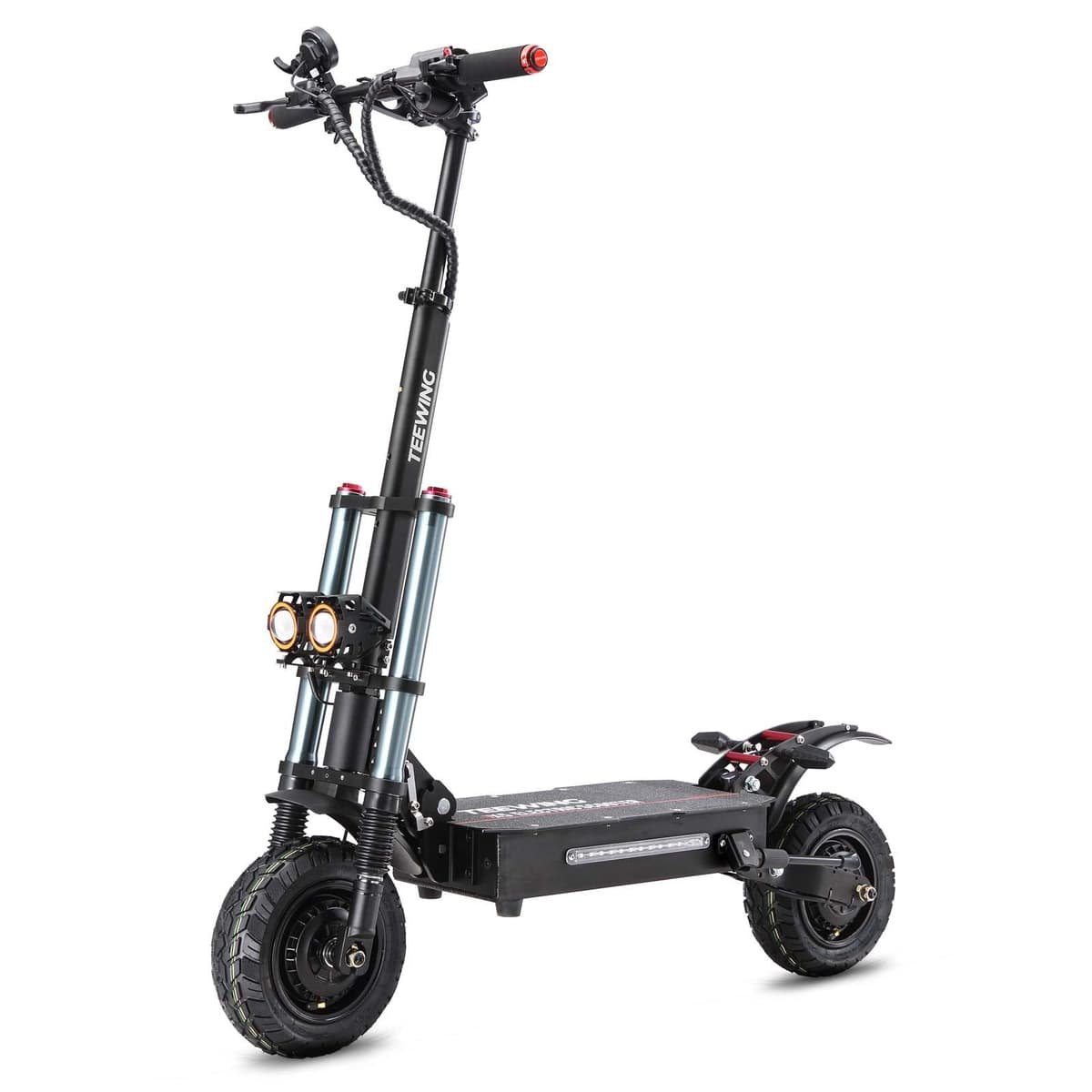
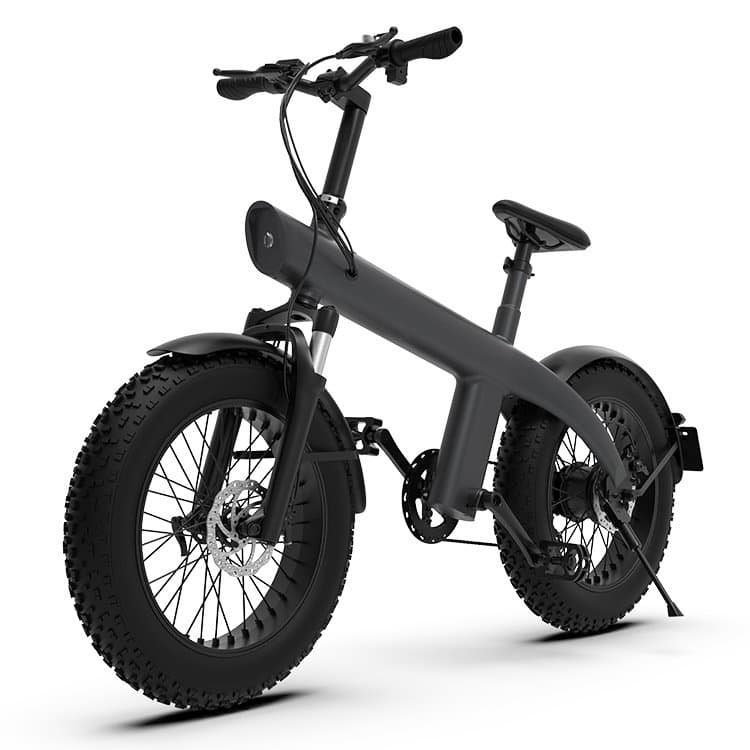
Volts, amp hours and watt hours are three different numbers. Here is what each one tells you, and what changes on the road as you move from 36V to 72V.
The short answer
Electric scooter battery voltage is the electrical pressure the pack delivers, and it largely decides how fast the motor can spin and how hard it can pull without strain. Commuter models run at 36V or 48V, stronger single and dual motor models at 52V or 60V, and performance models at 72V. Voltage alone does not tell you range: multiply the volts by the amp hours to get watt hours, the real size of the tank.
Three numbers describe an electric scooter battery, and each one answers a different question.
The math is simple. The Segway Max G2 carries a 36V 15.3Ah pack, which Segway lists at 551Wh. The KUKIRIN G2 Master carries a 52V 20.8Ah pack, listed at 1081 Wh, about twice the energy.
Amp hours on their own can mislead. A 36V 15Ah pack holds 540Wh, while a 60V 15Ah pack holds 900Wh. Same amp hours, two thirds more energy. When two listings give different voltages, compare watt hours. To turn watt hours into realistic miles, see how far an electric scooter really goes.
Voltage mostly sets how fast the motor can spin, and together with motor watts, how hard it can pull. An electric motor’s top speed rises with the voltage fed to it. Power is volts multiplied by amps, so a higher voltage system delivers the same power with less current. Less current means less heat in the wiring, controller and motor, which helps on long climbs and repeated hard starts.
That is why most commuter models sit at 36V or 48V, while dual motor and performance models move up to 60V and 72V. The extra voltage gives the controller room to feed two strong motors without straining.
Voltage is not the whole story. The motor, the controller current, the wheel size and the maker’s tuning all shape the result. Two 60V models in our catalog show it: the E-TWOW TankTorq TK2 Lite pairs a 60V 10Ah pack with a single 600W motor and tops out at 25 mph, while the KUKIRIN G4 pairs a 60V 20Ah pack with a 2000W motor for 43 mph. Same voltage, very different scooters.
For climbing, read voltage and motor watts together, and think about your own weight. Our guide to electric scooters for hills covers grades, power and riding technique in detail.
Each step up usually adds speed, power, battery size and weight. Here is how the voltages line up in our catalog, using the makers’ figures.
| Model | Top speed (mph) | Range (miles) | Motor power (W) |
|---|---|---|---|
| Hiboy S2 Pro Electric Scooter | 19 | 25 | 600 |
| Segway Max G2 Electric Scooter | 22 | 43 | 450 |
| Segway Max G3 Electric Scooter | 28 | 50 | 850 |
| ASAP 10 V2 Electric Scooter | 35 | 40 | 800 |
| Ausom DT2 Pro Electric Scooter | 40 | 71 | 1,100 |
| KUKIRIN G2 Master Electric Scooter | 37 | 43 | 2,000 |
| NAVEE UT5 Ultra X Electric Scooter | 43 | 74.6 | 2,400 |
| Segway GT3 Pro Electric Scooter | 50 | 86 | 3,400 |
Maker figures, checked September 2026. Real range and speed depend on rider weight, terrain, temperature and riding mode.
The voltage on the label is the nominal, or average, voltage. A lithium-ion cell sits around 3.6V for most of its discharge and reaches about 4.2V when full. Packs are built from cells connected in series, so:
You can see this in the specs. Gyroor lists a 42V maximum charging voltage for the 36V pack in the Gyroor C1S, E-TWOW lists a 54.6V charger for the 48V E-TWOW GT Sport, and WEPED lists its 60V packs at 67.2V full.
Voltage falls as the battery drains, and it dips under heavy load. That is why an electric scooter feels quickest on a full charge and softer near empty, and why a hard launch or a steep hill can make the battery gauge drop for a moment. Larger packs, with more cells sharing the load, sag less. Some models also protect the pack near empty: E-TWOW limits the TankTorq TK2 Lite to 7.5 mph below 10% charge.
Always charge with the charger made for your pack. A charger built for another voltage can overcharge the cells or fail to charge them, and both are safety risks. Never fit a battery of a different voltage to your electric scooter. Our battery care guide covers safe charging and storage.
Then choose the watt hours. Voltage shapes how the scooter feels, and watt hours decide how far it goes. A big battery at a modest voltage, such as the 36V 675 Wh pack in the INMOTION S1F, can make a better commuter than a fast model with a small pack. More voltage and more watt hours both mean more cells, so the scooter gets heavier as both numbers climb.
Plan for the speed that comes with voltage. A faster scooter needs stronger brakes, and our guide to electric scooter brakes explains which type suits which speed. Most models with big batteries also let you trade speed for range in a lower mode, as covered in electric scooter speed modes.
See every model in the electric scooter shop. Every order ships free to the lower 48 states, and you can spread the cost with Pay in 4 at 0% APR or monthly payments with Affirm.
Usually, but not always. Voltage sets how fast the motor can spin, and the motor, the controller and the maker’s tuning decide the rest. In our catalog, two 60V models top out at 25 mph and 43 mph.
A 52V pack has one more cell in series, 14 instead of 13, so it reads about 58.8V full instead of 54.6V. With a similar motor, that gives a little more speed and punch. The batteries and chargers are not interchangeable.
No. The controller, motor, display and charger are built for one voltage, and a different pack can damage them or create a fire risk. Use only the battery and charger the maker specifies for your model.
Neither on its own. Multiply them to get watt hours, the total energy in the pack, and compare that number between models.
Battery voltage falls as the charge drops, so the motor cannot spin as fast. Some models also limit speed near empty to protect the pack. If the slowdown starts earlier every month, the battery may be wearing out.
Prices run from light commuters under $500 to hyper scooters past $5,000. Here is what each band buys, what pushes the price up and what you spend after checkout.
72 volts is where electric dirt bikes start to pull like full-size motorcycles. Here is what the number changes, what it does not, and who should ride one.
The right first electric dirt bike is the one you can touch the ground on and control at low speed. Here is how to size it, how much power to start with and where to ride it.
30+ brands and 200+ models, with free shipping to the 48 contiguous states. Stuck between two? Our AI assistant answers calls and texts any time at (240) 916-2471.