Electric scooter safety gear: helmets, lights and what to wear
Most electric scooter falls happen at low speed, on your hands and head. The right gear is cheap next to the scooter and it matters every ride.
Pay in 4 at 0% APRLearn more
Order by 2 PM ET · ships in 1–2 business days
14-day returnsSee the policy
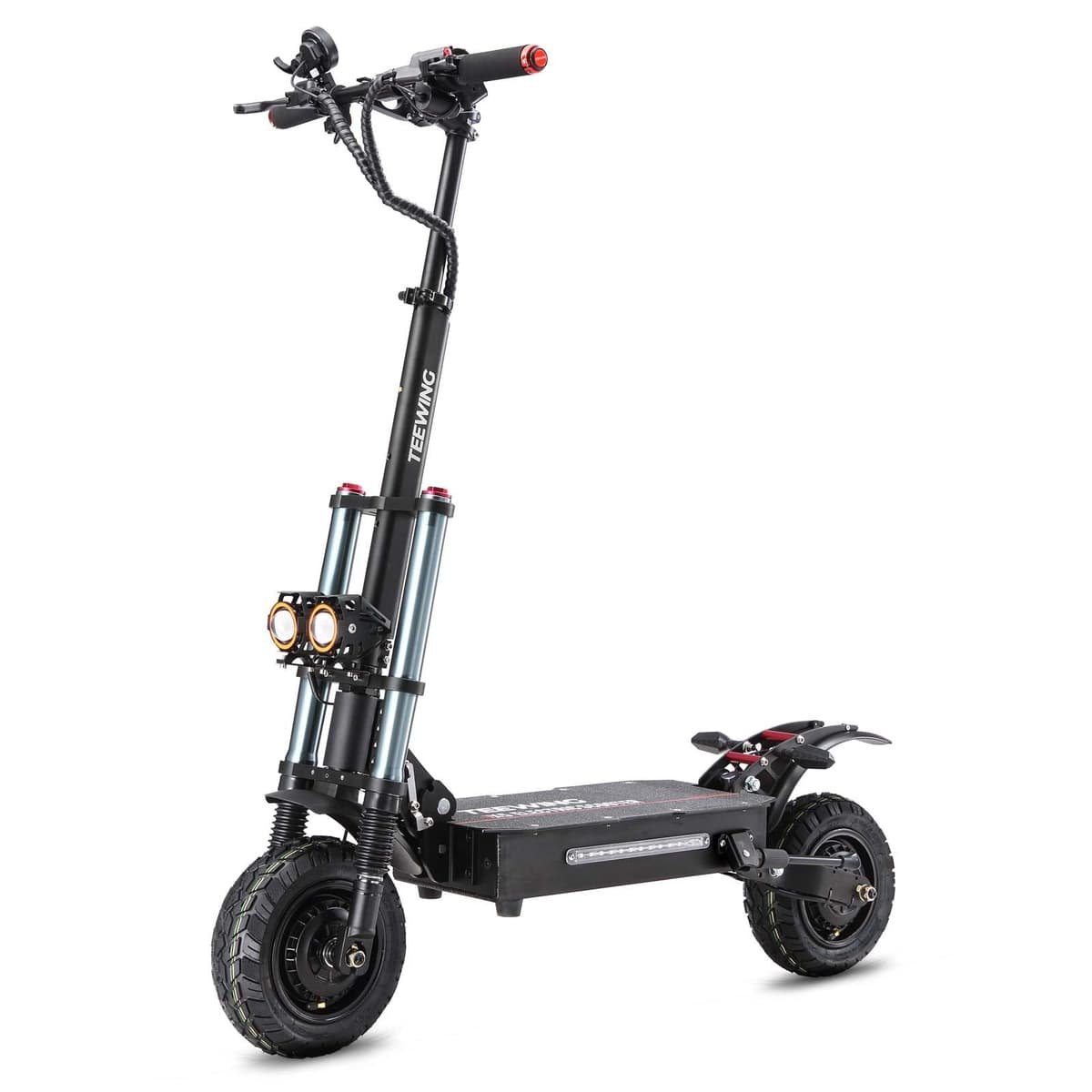
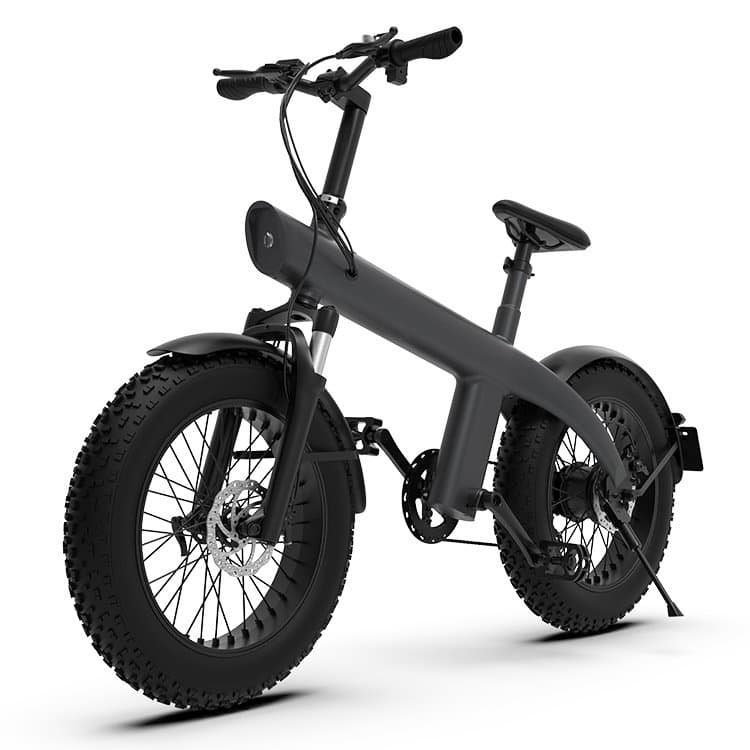
Five kinds of brake turn up on electric scooters, and most models combine two or three. Here is how each one stops you, what it asks of you in upkeep, and which suits your speed.
The short answer
Electric scooter brakes come in five types. Drum brakes are sealed and need little care. Mechanical disc brakes bite harder and are easy to adjust. Hydraulic disc brakes give the strongest, smoothest stops for the lightest pull. Electronic and regenerative brakes use the motor to slow you and return a little charge, and a foot brake presses the rear fender onto the tire. Most good models combine two, and faster ones need hydraulic discs on both wheels.
Every brake turns movement into something else, and electric scooters use two families of brake to do it.
Most models pair the two. A typical setup is a friction brake on one wheel and the motor brake on the other, or friction brakes on both wheels with the motor brake added on top. On most models, squeezing a brake lever also cuts power to the motor, so the scooter does not push against you while you stop.
The front brake does most of the work. When you slow down, your weight shifts forward and presses the front tire into the road. That is why a strong front brake matters, and why you should squeeze it progressively rather than grab it.
A drum brake hides its shoes inside the wheel hub, where they press outward against a spinning drum. Because it is sealed, water, grit and oil stay out, so it behaves the same on wet and dry days and needs very little care.
The trade off is power. Drums stop less sharply than discs, can fade on long descents as they heat up, and are harder to service when the shoes finally wear. They suit commuter models up to about 20 mph.
The AOTOS E3 pairs a front drum with a rear electronic brake whose regenerative strength you can adjust in the app. The Hiboy U2 uses drums front and rear with electronic braking, and the NAVEE GT3 combines a front drum with a rear EABS motor brake.
A mechanical disc brake uses a steel cable to pull a caliper shut on a rotor bolted to the wheel. It bites harder than a drum and sheds heat better, so it stays stronger on long hills.
Cables stretch and pads wear, so mechanical discs need adjusting every so often, usually with a barrel adjuster on the lever or a bolt at the caliper. The rotor sits in the open, where it can pick up oil or get bent in a fall. On the plus side, any bike shop understands them.
The NANROBOT G3 uses mechanical discs on both wheels, and the dual motor iENYRID ES1 adds E-ABS motor braking to its front and rear mechanical discs. The Teewing GT2 also stops with mechanical discs.
A hydraulic disc brake pushes fluid through a sealed line to move pistons in the caliper. Fluid does not stretch like a cable, so you get more stopping force for less effort at the lever, finer control and pads that adjust themselves as they wear.
Hydraulic brakes need their fluid refreshed and the lines bled now and then, following the maker’s schedule. Use only the fluid the maker names: Hooga lists DOT fluid for the 4-piston brakes on the Hooga Daytona 72V, and DOT fluid and mineral oil must never be mixed. YUME lists a stop in 5 ft from 15 mph for the YUME Raptor2, which pairs dual hydraulic brakes with electronic braking.
Electronic braking uses the motor itself to slow the wheel, and regenerative braking returns part of that energy to the battery. Makers label it EABS, E-ABS, EBS or KERS. It is smooth, wears nothing out, and can take some load off the friction brakes on every stop.
It has limits. A motor brake is weaker than a good friction brake, fades at very low speed and needs battery power to work. The charge it puts back is small, so think of it as a bonus, not a range booster. That is why it always comes alongside at least one friction brake.
The E-TWOW GT Sport shows a light scooter setup: a front electric regenerative brake, a rear drum and a rear mudguard brake, three in all. The dual motor E-TWOW TankTorq TK3 pairs EBS with energy recovery and hydraulic discs on both wheels.
A foot brake is the rear fender, sprung so you can step on it and press it onto the tire. It is simple and needs no power, which makes it a handy backup, but it is weak at speed and wears the tire.
You will find it on kids’ models such as the NANROBOT K1 and NANROBOT K2, and as an extra brake on light commuters. The Wilson’s Mosquito combines regenerative braking, a rear drum and a step-on brake. Practice it in an empty lot first, since you balance on one foot while the other presses the fender.
More speed means more energy to get rid of, so the brakes have to step up with the scooter. As a rough guide:
| Model | Top speed (mph) | Range (miles) | Motor power (W) |
|---|---|---|---|
| AOTOS E3 Electric Scooter | 20 | 28 | 650 |
| Hiboy U2 Electric Scooter with Seat | 20 | 25 | 411 |
| NANROBOT G3 Electric Scooter | 28 | 25 | 800 |
| iENYRID ES1 Dual Motor Electric Scooter | 37 | 37 | 2,400 |
| Teverun Fighter Mini PRO Electric Scooter | 40 | 62 | 2,000 |
| YUME Raptor2 Electric Scooter | 54 | 67 | 3,500 |
Maker figures, checked September 2026. Real range and speed depend on rider weight, terrain, temperature and riding mode.
Check your brakes before every ride and adjust them monthly. Our electric scooter maintenance checklist has the full routine. Good brakes work best when people can see you stopping, so read our guide to electric scooter lights for brake lights and signals.
Browse every model in the electric scooter shop. Every order ships free to the lower 48 states, and the warranty page explains what is covered.
Hydraulic disc brakes stop hardest with the least effort and suit fast models. Drum brakes need the least upkeep and suit commuters up to about 20 mph. Mechanical discs sit in between. The best choice depends on how fast you ride.
No. A motor brake is weaker than a friction brake, fades at low speed and needs battery power. Use it alongside at least one mechanical or hydraulic brake.
It depends on your weight, speed and hills. Check the pads monthly and replace them when they reach the maker’s minimum thickness, or when the lever travel keeps growing after adjustment.
The usual causes are oil or dirt on the rotor or pads, glazed pads, or a misaligned caliper. Clean the rotor with isopropyl alcohol, replace contaminated pads, and have the caliper aligned if the noise continues.
Most electric scooter falls happen at low speed, on your hands and head. The right gear is cheap next to the scooter and it matters every ride.
There is no single US law for electric scooters. States set the frame, cities fill it in, and both change. Here are the eight things to look up.
Light rain is fine for some models and a bad idea for others. The IP rating tells you which, if you know how to read it.
30+ brands and 200+ models, with free shipping to the 48 contiguous states. Stuck between two? Our AI assistant answers calls and texts any time at (240) 916-2471.