Financing an electric scooter: how Pay in 4 and monthly plans work
Splitting the cost can make sense, as long as you know which plans are interest free, which are not, and what you will have paid at the end.
Pay in 4 at 0% APRLearn more
Order by 2 PM ET · ships in 1–2 business days
14-day returnsSee the policy
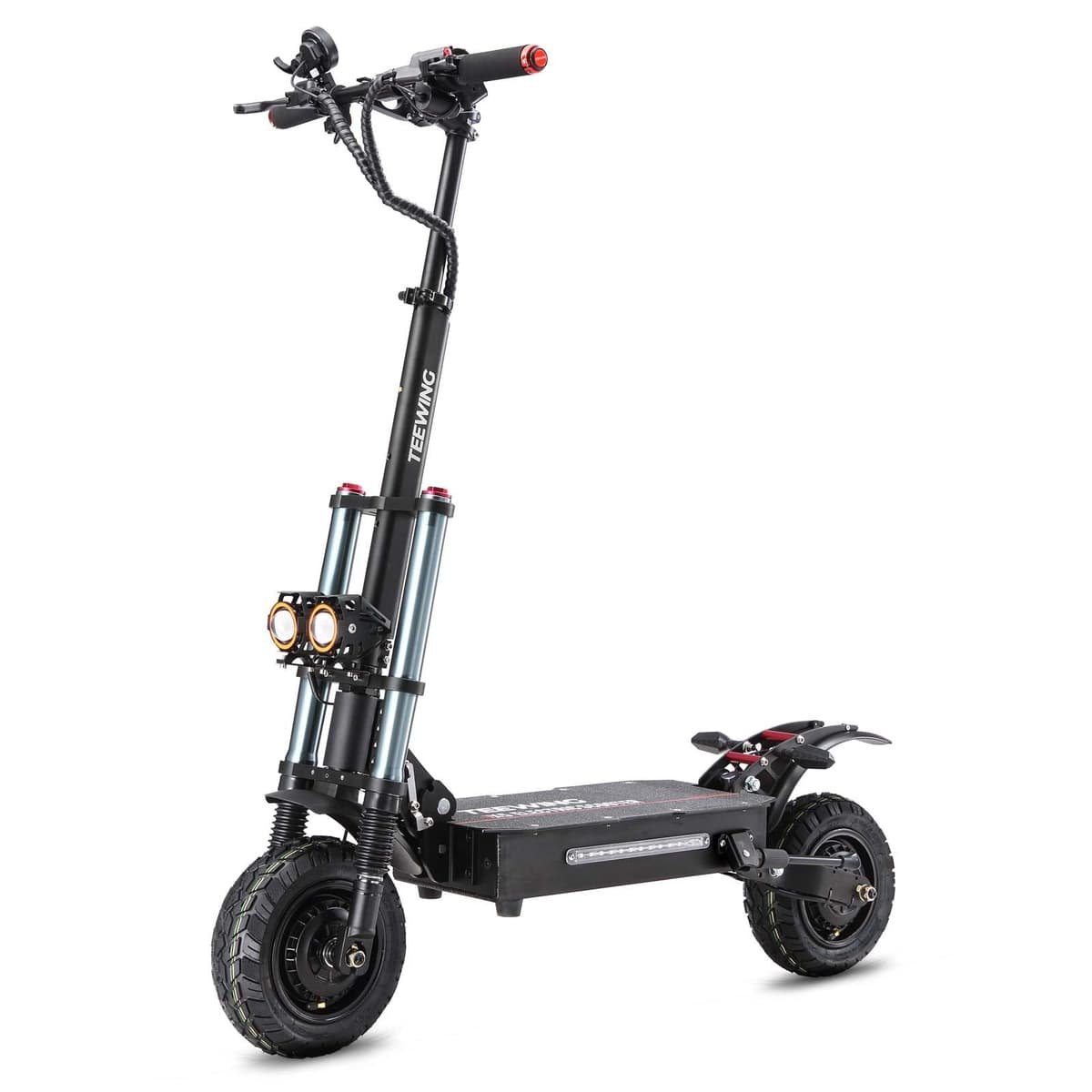
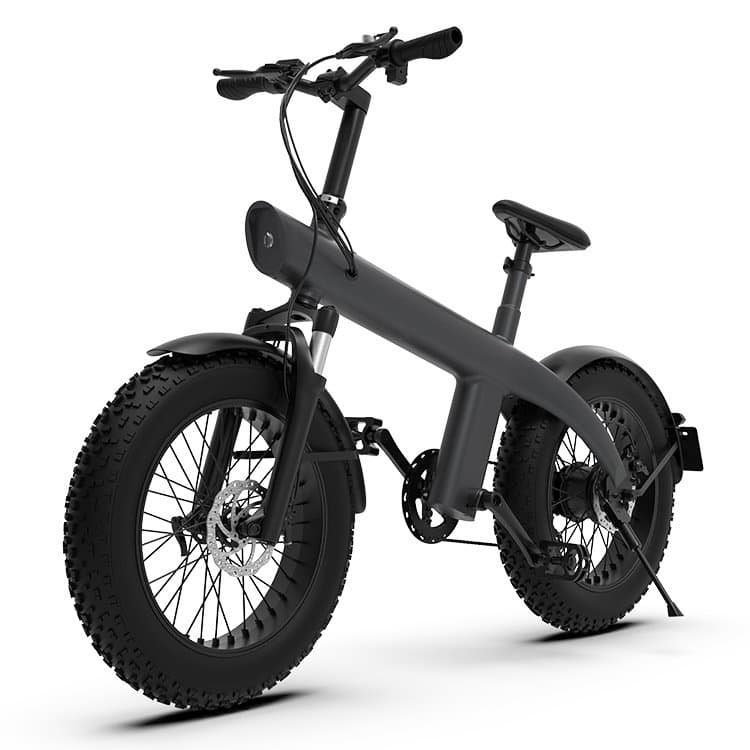
The range on the product page is measured on a test course, not on your commute. Here is how to turn that number into one you can plan around.
The short answer
Entry level electric scooters are rated for roughly 15 to 25 miles, mid range models for 30 to 50, and long range models for 60 or more. Those are maker figures from gentle test conditions. In everyday riding, plan on about 60 to 70% of the advertised number, and less in cold weather, on hills or at full speed.
The advertised figure is a best case, measured the same way each time. There is no single industry standard, but most makers describe similar conditions: a rider of around 165 pounds, flat pavement, a steady speed in the low or middle riding mode, mild temperature and no wind.
Nothing about that is dishonest. It is a repeatable test, and it lets you compare one model with another. It simply is not your commute, which has traffic lights, hills, a backpack and mornings in February.
Start with 60 to 70% of the advertised number. That suits an average adult riding in the normal mode on mixed city streets in mild weather. Then adjust:
A worked example: a model advertised at 40 miles gives most riders somewhere around 24 to 28 miles. If your round trip is 12 miles, that leaves a comfortable margin, and you will still have it after the battery has aged a few years.
A good rule: pick a model whose advertised range is about double your longest regular round trip. You will never worry about making it home, and shallow discharges are kinder to the battery.
Watt hours tell you how much energy the battery holds. Multiply the battery voltage by its amp hours: a 48V 15Ah pack holds 720Wh. Because every maker tests range a little differently, watt hours are the fairer comparison between two models.
As a rough guide, a commuter electric scooter ridden sensibly uses somewhere around 20 to 30Wh per mile. Fast, heavy, dual motor models use more. Divide the watt hours by that figure and you get a realistic estimate to set beside the advertised one.
| Model | Top speed (mph) | Range (miles) | Motor power (W) |
|---|---|---|---|
| Hiboy S2 SE | 19 | 17 | 430 |
| KUKIRIN G2 | 27 | 34 | 800 |
| KUKIRIN G4 | 43.5 | 43 | 2,000 |
| EMOVE Cruiser V2 | 44 | 62 | 1,000 |
| NAMI Burn-E 4 Max | 61 | 62 | 8,400 |
Maker figures, checked September 2026. Real range and speed depend on rider weight, terrain, temperature and riding mode.
Measure your real trip first. Map the round trip you make most often, add any detours you make regularly, then double it. That is the advertised range to shop for.
More range means a bigger battery, and a bigger battery means more weight and a higher price. If you carry the electric scooter up stairs, do not buy more range than you need. Our guide to choosing an electric scooter covers that trade off, and you can browse every model by range in the electric scooter shop.
The advertised figure comes from a gentle test: a light rider, flat ground, moderate steady speed and mild weather. Everyday riding is harder on the battery, so 60 to 70% of that figure is normal.
Yes, slowly. Every lithium-ion battery loses some capacity over hundreds of charge cycles. Buying with a margin means you will not notice for a long time.
A little. It recovers a small share of energy when slowing down and is most useful on long descents. It will not make up for hard riding.
Only if the maker of your model sells one for it. Wiring in a battery that was not designed for the electric scooter is a fire risk and usually ends the warranty.
Splitting the cost can make sense, as long as you know which plans are interest free, which are not, and what you will have paid at the end.
Commuter models top out near 15 to 20 mph. The fastest ones pass highway speeds. Here is what each step up actually feels like and what it demands.
The weight limit on the spec sheet is where the search starts, not where it ends. Motor power, brakes, tires and deck size matter just as much.
30+ brands and 200+ models, with free shipping to the 48 contiguous states. Stuck between two? Our AI assistant answers calls and texts any time at (240) 916-2471.