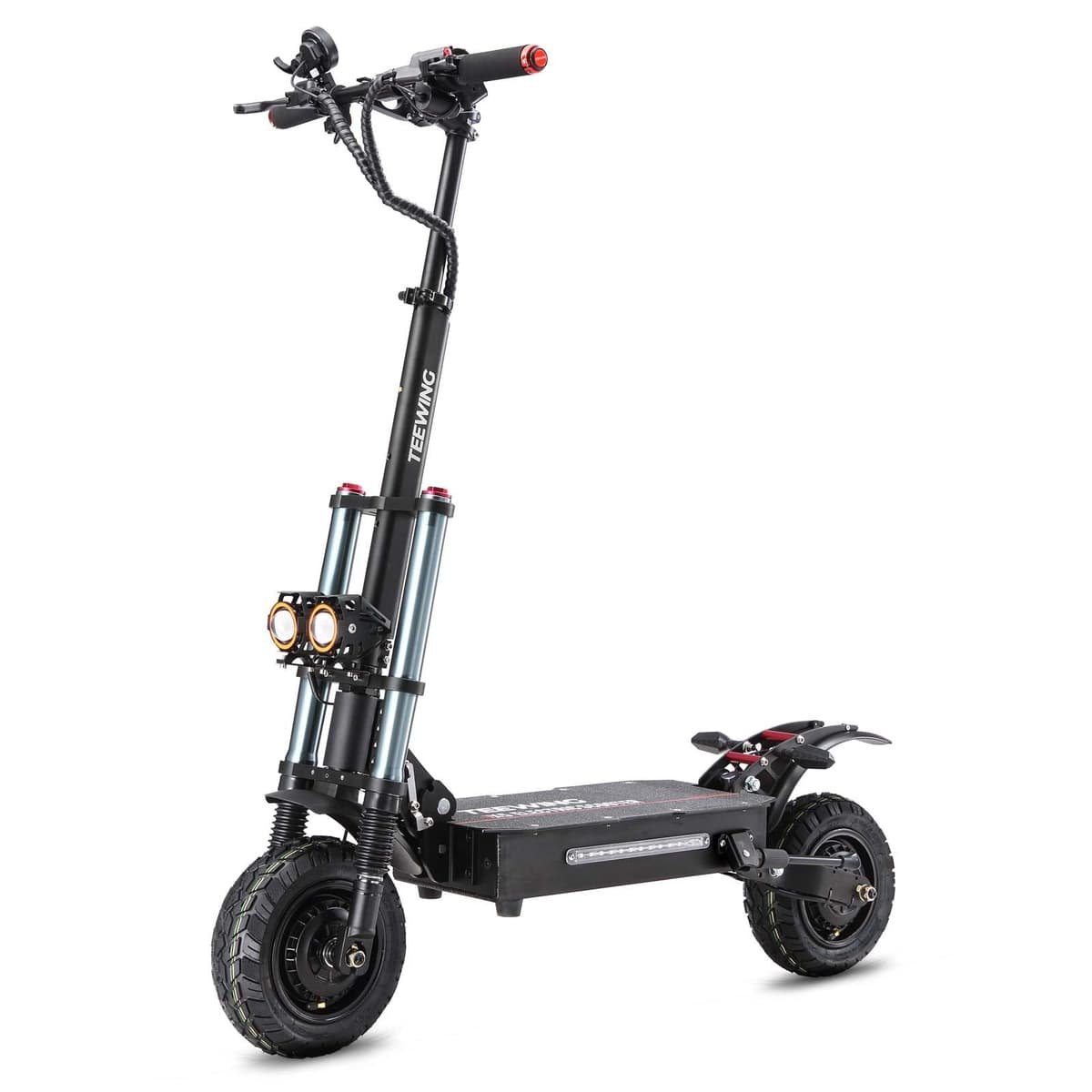
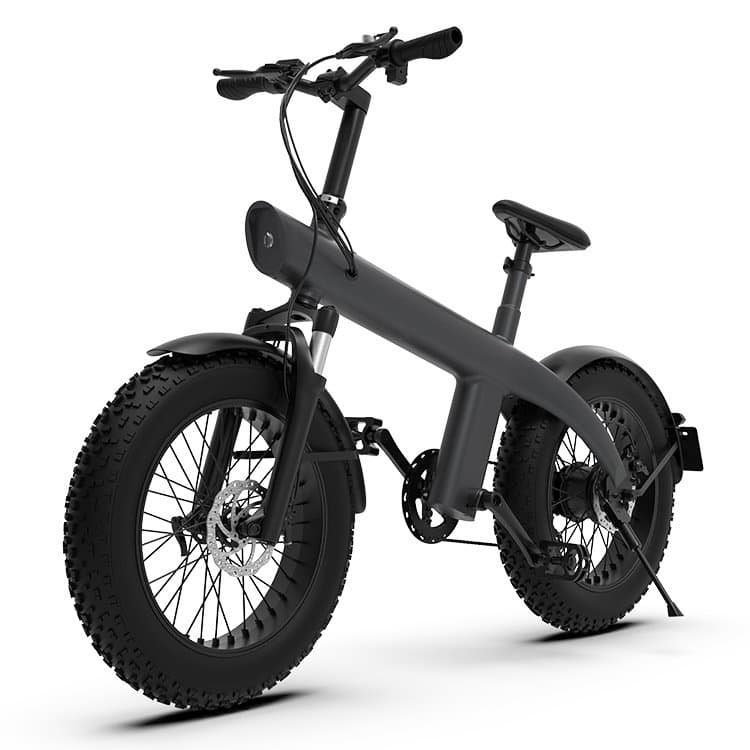
Electric scooter IP rating explained: IPX4, IPX5, IP54, IP55, IP65, IPX6 and IPX7
Two digits tell you how well an electric scooter keeps out dust and water. Here is what each common rating means, what the tests never cover, and which models carry which rating.
Published Oct 8, 20266 min read
SPLASH
The short answer
An electric scooter IP rating has two digits. The first is dust protection from 0 to 6, the second is water protection, and an X means that part was not tested. IPX4 and IP54 handle splashes, IPX5 and IP55 handle low pressure jets, IP65 adds a dust-tight seal, IPX6 handles powerful jets and IPX7 survives brief immersion. No rating covers deep puddles, pressure washers, salt or aging seals.
The first digit is dust (5 is dust protected, 6 is dust tight). The second is water (4 splashes, 5 jets, 6 powerful jets, 7 brief immersion).
An X is not a zero. It means that part was not tested or not stated.
Ratings often apply to one part, such as the battery or display. The lowest number on the scooter is the one that counts.
A rating describes a short lab test on a new product. It is not a promise against water damage, and most makers exclude water damage from warranty.
How an IP code works
IP stands for ingress protection, a code from the international standard IEC 60529. It describes how well an enclosure keeps out solid objects and water under set test conditions. The code is two digits after the letters IP.
First digit, solids, 0 to 6. It runs from fingers and tools up to fine dust.
Second digit, water, 0 to 9. It runs from dripping water up to immersion and high pressure cleaning.
X in either place means that part was not tested, or the maker did not state it. IPX5 has a water rating and no dust rating. It does not mean zero dust protection.
Higher is not always a superset. Up to 6, a higher water digit includes the lower ones. Immersion (7) is a different test from jets (5 and 6), so an IPX7 product has not necessarily passed a jet test. A product that has passed both lists both, such as IPX6/IPX7.
The rating is the maker’s statement about the product, usually backed by its own testing or a lab report. If a listing is vague, ask the maker, or ask us and we will check.
The first digit: dust
For electric scooters, you will mostly see 4, 5 or 6 in the first place.
4: protected against solid objects larger than 1 mm, such as wire or small grit. The JOYOR S5-Z lists IP45.
5, dust protected: some dust can get in, but not enough to stop the electronics working.
6, dust tight: no dust gets in during the test.
Dust matters most if you ride gravel, dirt paths or dry building sites. On city streets, the water digit usually matters more.
The common ratings, from IPX4 to IPX7
Here is what each rating you will see on an electric scooter means, with models in our catalog that list it.
IPX4: splashing water from any direction, tested with a spray for several minutes. The Hiboy S2 Pro, Segway E2 Pro and Gyroor C1S list IPX4.
IP55: dust protected plus low pressure jets. The NAVEE V40i and NANROBOT H1 list IP55, and INMOTION lists IP55 for the body of the INMOTION Air.
IP65: dust tight plus low pressure jets. On scooters this usually covers a part. NAMI lists an IP65 dash and controller on the NAMI Klima, and Miniwalker lists an IP65 display on the Miniwalker Tiger 10 Pro+.
IPX7: temporary immersion, up to 1 meter of still water for 30 minutes. The E-TWOW TankTorq TK5 lists IPX7 for the scooter.
One model per rating: Hiboy S2 Pro (IPX4), KUKIRIN G2 Max (IP54), Segway E3 Pro (IPX5), NAVEE V40i (IP55), NAVEE UT5 Max (IPX6), YUME XTRON (IP66, vehicle-wide) and E-TWOW TankTorq TK5 (IPX7)
INMOTION lists IP54 for the body of the INMOTION S1F, and Gyroor lists IP54 for the mainframe of the Gyroor C1 Plus.
The lowest number decides where you can ride. A sealed battery does not help if water reaches the controller, the display wiring or the charging port. When a listing gives only a battery or display rating, treat the rest of the scooter as unrated until the maker says otherwise.
What an IP rating does not cover
An IP test is short, controlled and done on a new product standing still. Real riding is none of those things.
Speed and spray. At speed, the front wheel throws water up into the stem, deck and connectors from angles and at pressures no bench test copies.
Deep water. Even IPX7 means still water for 30 minutes, not wading through a flooded street with the motor running.
Pressure washers. Their pressure is far higher than an IPX6 jet. Only a 9K rating covers high pressure, hot water cleaning, and no electric scooter in our catalog lists it.
Salt and chemicals. Road salt and de-icers corrode connectors and bolts whatever the rating.
Aging and damage. Seals harden with age and heat, and a fall or a repair can unseat a gasket.
Open covers. A charging port cover left open defeats the rating.
Warranty. Most makers exclude water damage whatever the rating. Check your terms on our warranty page.
What the rating means for riding in rain
Use the water digit as a ceiling, then stay well below it.
No rating: keep it dry, and wait out the rain.
IPX4 or IP54: damp roads and light rain.
IPX5 or IP55: steady rain and road spray.
IPX6 or IP66: heavy rain on the road.
IPX7: extra margin in heavy rain, still no puddle wading.
Each product page in the electric scooter shop shows the maker’s water rating where one is published. Every order ships free to the lower 48 states, and if a page shows no rating, contact us and we will check with the maker.
Questions riders ask
Is IPX7 better than IPX6?
Not always. IPX7 is an immersion test and IPX6 is a powerful jet test, and they are separate. A product rated IPX7 has not necessarily passed a jet test unless it lists both, such as IPX6/IPX7.
What does the X in IPX5 mean?
The X means the dust part was not tested or not stated. It does not mean the electric scooter has no dust protection, only that there is no rating for it.
Is IP54 or IPX5 better for rain?
For rain, look at the second digit. IPX5 is rated for low pressure jets, while IP54 is rated for splashes. IP54 adds a dust rating, which matters more off-road.
Can I wash my electric scooter with a hose?
It is best not to. Wipe it down with a damp cloth instead. A hose or pressure washer can push water past seals, and water damage is usually not covered by warranty.
Does an IP rating mean water damage is covered?
Usually not. Most makers exclude water damage from warranty whatever the rating, so read the terms for your model before riding in the wet.
Most riders never think about insurance until a scooter is stolen or someone gets hurt. Here is when it may be required, the kinds of cover to look at, and the questions to ask your insurer.
An electric scooter has very few parts that need attention. The ones that do are the ones that keep you upright and let you stop.
Oct 8, 20265 min read
Ready to look at models?
Shop the rides
30+ brands and 200+ models, with free shipping to the 48 contiguous states. Stuck between two? Our AI assistant answers calls and texts any time at (240) 916-2471.