How much does an electric scooter cost? 2026 price guide
Prices run from light commuters under $500 to hyper scooters past $5,000. Here is what each band buys, what pushes the price up and what you spend after checkout.
Pay in 4 at 0% APRLearn more
Order by 2 PM ET · ships in 1–2 business days
14-day returnsSee the policy
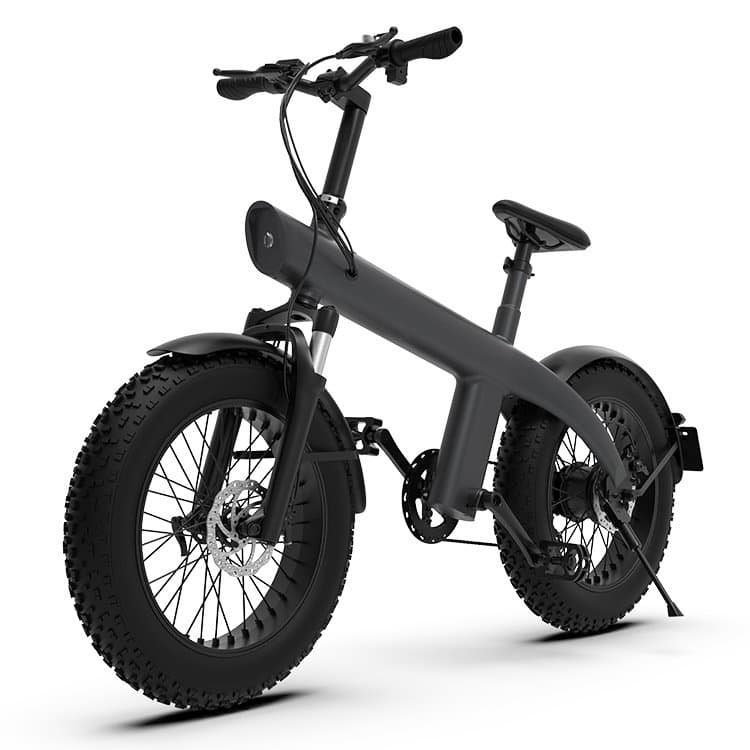
Watts get the headlines, but torque, low gears and the right sensor get you up the hill. Here is what to compare, and which of our e-bikes list the most pull.
The short answer
A good electric bike for hills pairs high torque with low gears and enough battery for the climb. Compare torque in newton meters first: our e-bikes that list it run from 34 to 100 Nm, and the strongest list 85 Nm or more. Then check the climbing rating, a wide gear range, a torque sensor for help that grows as you push, and hydraulic disc brakes for the way down. Climbing drains the battery much faster than flat riding, so choose a range well above your trip.
Four things decide how an electric bike climbs: torque, motor power, gearing and battery. The sensor shapes how the help arrives, and the brakes look after the descent. Your own weight and what you carry count too, because the motor has to lift all of it.
Every electric bike in our catalog that names its motor type uses a hub motor. A mid-drive can use the bike’s gears to climb, and we cover that difference in hub vs mid drive motor. Here we focus on the numbers you can compare on any listing.
Torque is the turning force the motor puts into the wheel. It is what pulls you away from a stop on a slope and keeps you moving as the road steepens. Makers list it in newton meters (Nm). Higher is stronger.
Among our e-bikes that list torque, the figures run from 34 Nm on the Speedway Riders Q3 and 40 Nm on the Gyroor EB262 and EB263, up to 100 Nm on the AOTOS FLUX X26 Pro. The off-road Segway Xyber lists 175 Nm of peak torque with two batteries.
| Model | Top speed (mph) | Range (miles) | Motor power (W) |
|---|---|---|---|
| AOTOS FLUX X26 Series Fat Tire Electric Bike | 28 | 50 | 1,200 |
| ASAP Zen Folding Electric Bike | 28 | 35 | 500 |
| Hiboy EX11 Full Suspension Electric Bike | 20 | 100 | 880 |
| Segway Myon Electric Bike | 28 | 80 | 1,500 |
| NAVEE Wolf X Electric Bike | 20 | 45.5 | 1,000 |
| ASAP Zebra Electric Bike | 35 | 50 | 1,000 |
| Segway Xafari Electric Bike | 20 | 88 | 750 |
| Segway MUXI Pro Electric Bike | 28 | 73 | 750 |
Maker figures, checked September 2026. Real range and speed depend on rider weight, terrain, temperature and riding mode.
Lower torque does not rule a bike out. The Speedway Riders Q3 lists a 20 degree climbing angle, and the Gyroor EB263 a 20 degree maximum climb. They suit riders whose hills are shorter, or who are happy to pedal harder.
Most listings give two power figures. The rated figure is what the motor can keep up for a long time. The peak figure is a short burst. On a long climb, the rated figure is closer to what you get. On a short, steep ramp, the peak helps.
Climbing ratings help you compare, but check the unit. Hiboy lists a 20% maximum climb on the EX9, P6, EX6 and EX11, and ASAP lists 30 degrees on the Zebra. A 20% grade is about 11 degrees, and 20 degrees is about a 36% grade, so the same number can mean very different hills. Makers test with their own rider weight and surface, so treat ratings as a guide.
Many states expect an e-bike motor rated at 750 watts or less. See e-bike classes explained before you shop for the most power.
On a hub motor bike, the gears are for your legs. A low gear lets you keep pedaling at a comfortable pace as the bike slows, which adds your effort to the motor’s and keeps the assist working. Shift down before the hill starts, not halfway up.
Auto shifting is handy on hills, because it picks a lower gear as the slope rises without a thought from you.
A torque sensor adds help as you push harder, so a climb feels smooth and the motor answers the slope. The Segway Myon and Hiboy EX11 list torque sensors, and Hiboy lists a dual-sided torque sensor on the EX9. ASAP lists torque or cadence sensing on the Zen, Varna and Pioneer.
A cadence sensor gives the same help whatever the slope, so you raise the assist level as the road tilts up. The Segway MUXI lists a cadence sensor. We compare the two in torque sensor vs cadence sensor.
A throttle helps you restart on a slope, where getting the pedals turning is hardest. Where you may use one depends on the class and your local rules. Our sibling guide to throttle vs pedal assist explains how each mode works.
A climb draws far more power than flat riding, so a hilly route uses the battery faster. The listed range comes from gentle riding, and a daily route with steep hills can cut it sharply. Choose a range well above your trip, and save the top assist levels for the steepest parts.
Bigger batteries give you that margin. The Segway Xafari holds 936Wh, the Hiboy EX11 864Wh, the Speedway Riders Q3 960Wh and the AOTOS FLUX X26 Pro 1,008Wh. The Gyroor EB262 and Hiboy C1, with 36V 7.8Ah batteries, are lighter to carry but have less in reserve for long climbs. Our sibling guide to long range electric bikes lists the biggest batteries we carry.
Cold weather and a low battery both reduce the power available, so a hill that feels easy on a full charge in summer can feel harder on a winter evening.
Every climb ends in a descent, and a heavy electric bike picks up speed fast. Hydraulic disc brakes need less hand effort and stay consistent on long descents. The Hiboy EX11 lists dual-piston hydraulic discs with 180 mm rotors, the Segway Myon, MUXI and MUXI Pro hydraulic discs with 180 mm rotors, and the Segway Xyber a 4-piston front caliper. The Gyroor EB262 and EB263 use mechanical discs, which work well but need adjusting by hand as the pads wear.
Heavier riders should read our guide to choosing an electric bike for heavy riders, and scooter riders can compare with the best electric scooters for hills. Browse every model in the electric bike shop. Every order ships free to the lower 48 states, and you can split the cost with Pay in 4 at 0% APR or monthly payments with Affirm.
More torque climbs more easily. Among our e-bikes, the strongest list 85 to 100 Nm. Lower figures can still handle moderate hills if you shift down and pedal along.
It can be. Torque matters more than the watt figure: the ASAP Zen pairs a 500W geared hub motor with 90 N·m. Check the torque and the climbing rating, not just the wattage.
Yes. It adds more help as you push harder, so the motor responds to the slope. With a cadence sensor, raise the assist level or shift down as the hill starts.
Yes, much faster. Climbing takes far more power than flat riding, so plan on fewer miles than the listed range on a hilly route.
Hydraulic disc brakes, front and rear. They need less hand effort and stay consistent on long descents. Many of our e-bikes list them, including the Hiboy EX11 and the Segway Myon.
Prices run from light commuters under $500 to hyper scooters past $5,000. Here is what each band buys, what pushes the price up and what you spend after checkout.
72 volts is where electric dirt bikes start to pull like full-size motorcycles. Here is what the number changes, what it does not, and who should ride one.
The right first electric dirt bike is the one you can touch the ground on and control at low speed. Here is how to size it, how much power to start with and where to ride it.
30+ brands and 200+ models, with free shipping to the 48 contiguous states. Stuck between two? Our AI assistant answers calls and texts any time at (240) 916-2471.