Financing an electric scooter: how Pay in 4 and monthly plans work
Splitting the cost can make sense, as long as you know which plans are interest free, which are not, and what you will have paid at the end.
Pay in 4 at 0% APRLearn more
Order by 2 PM ET · ships in 1–2 business days
14-day returnsSee the policy
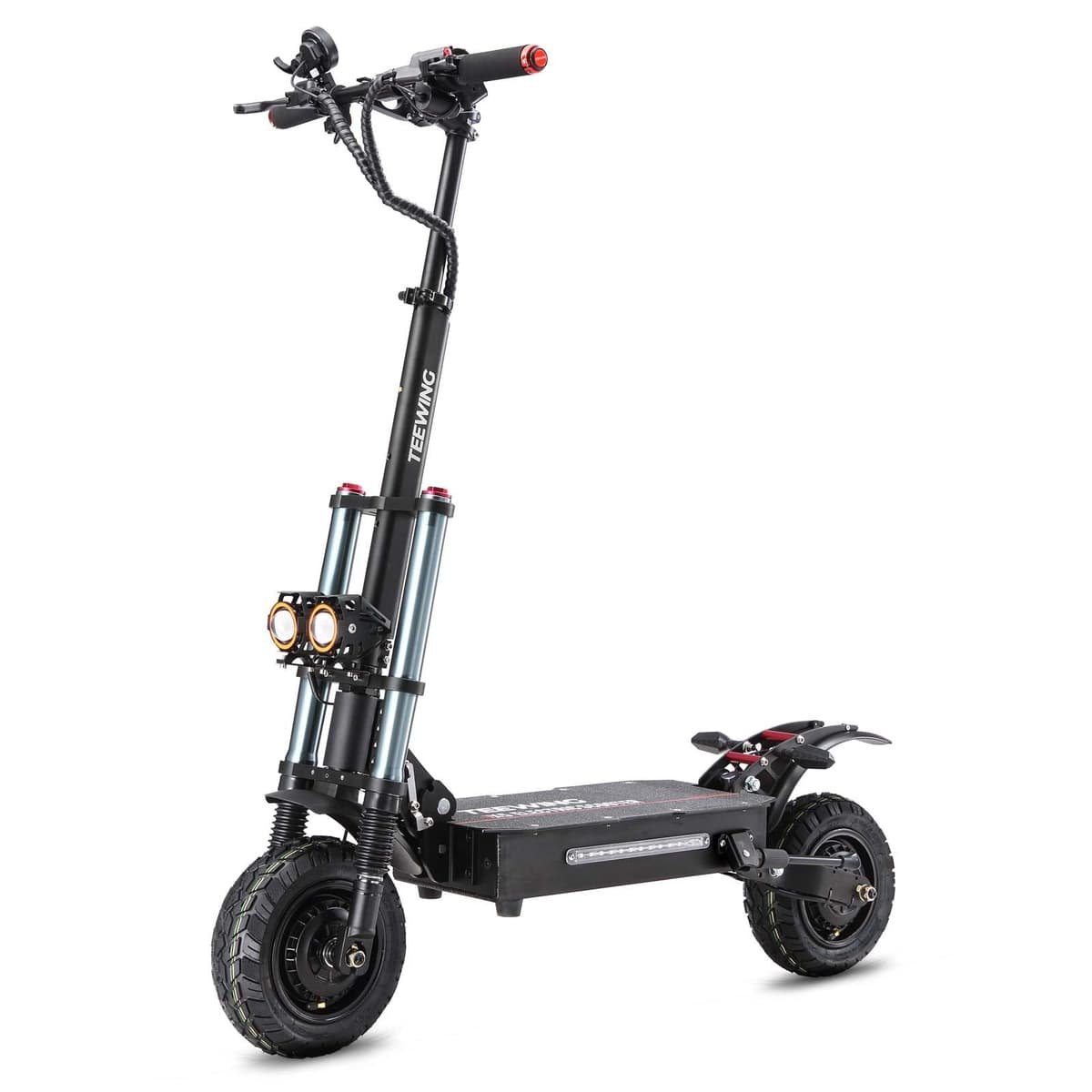
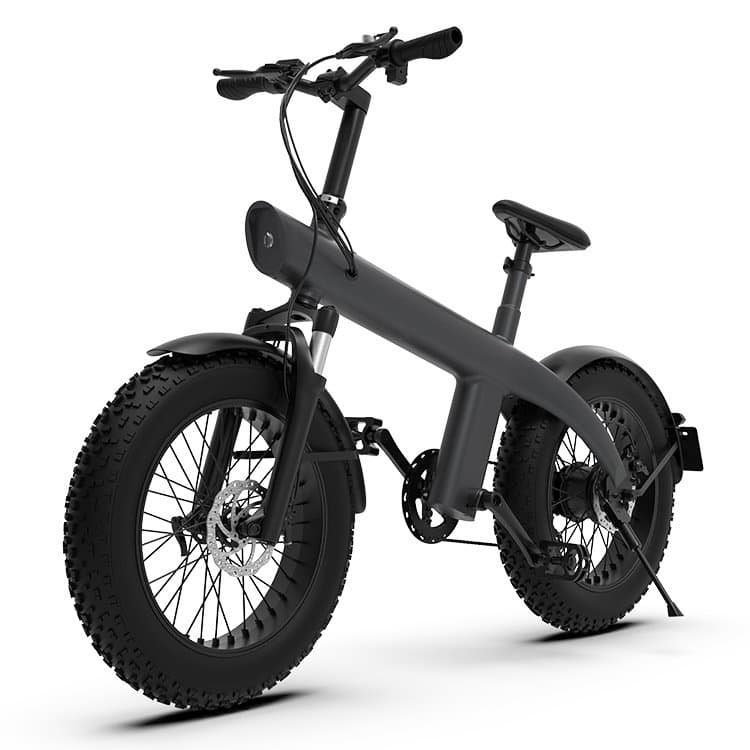
Four inch tires grip sand, snow and broken pavement and soak up bumps. They also add weight and cost some range. Here is how to tell if fat tires fit your riding.
The short answer
A fat tire electric bike rides on tires about 4 inches wide or more. They grip sand, gravel, snow and broken pavement, and the large air volume cushions bumps. The trade offs are weight, some range on smooth pavement, and a bulkier bike to store and carry. Fat tires suit riders on mixed or rough surfaces, heavier riders and anyone who wants a stable, comfortable ride. Before you buy, check the tire size, the bike weight, the battery, the brakes and the maximum payload.
A fat tire electric bike uses tires about 4 inches wide, roughly twice the width of a typical commuter tire. The most common sizes are 20 x 4.0 and 26 x 4.0 inches, and a few go wider: the Segway Xyber rolls on 20 x 5.0 inch tires.
The wide tire holds a lot of air at a lower pressure, so more rubber touches the ground. That bigger contact patch is where the grip and comfort come from.
Fat tires show up on many styles of e-bike: step-through frames like the Hiboy EX6, folding frames like the ASAP Zen, full suspension trail bikes like the Hiboy EX11, and moped style models like the NAVEE KG05.
A fat tire may not be the right fit if you carry your bike up several flights of stairs, take it on a train every day, or ride long distances on smooth pavement where a narrower tire rolls more easily.
Pros:
Cons:
20 x 4.0 inch wheels sit lower, so the bike is easier to get on and off, and the steering feels quick. You find them on step-through and folding models, such as the Speedway Riders Q3, the Hiboy EX6 and the ASAP Zen.
26 x 4.0 inch wheels roll over roots, curbs and holes more easily and feel closer to a mountain bike. The Hiboy P6 and the Hiboy EX11 use 26 x 4 inch tires, and the EX11 lists them as puncture resistant. The ASAP Pioneer pairs 26 x 4.0 inch Kenda tires with a folding frame.
Check the rider height range for the size you pick. The Q3 lists riders from 5 ft 6 in and up, while the Hiboy EX6F lists 4 ft 9 in to 6 ft 5 in.
Tire pressure matters more on fat tires. Stay within the range printed on the tire sidewall. Run toward the low end for sand and snow and toward the high end on pavement, where it saves range.
Wide tires, strong frames and big batteries add up. In our catalog, the Speedway Riders Q3 lists a net weight of 53 lbs, the Hiboy P6 65 lb, the Hiboy EX6F about 71 lb and the Hiboy EX11 99.2 lbs. Moped style fat tire models weigh more again: the NAVEE KG05 lists 104.7 lbs and the Segway Xyber 146.4 lbs.
A removable battery makes lifting easier, and the Q3, P6 and EX11 all have one. If the bike goes on a car rack, check that the rack is rated for the weight and fits a 4 inch tire.
Compare batteries in watt hours (volts x amp hours). The Speedway Riders Q3 has a 48V 20Ah pack, or 960Wh, the Hiboy EX11 864Wh, the ASAP Varna 48V 17Ah and the Hiboy P6 48V 11.6Ah. More watt hours means more range, and more weight.
Pedaling makes a big difference. Hiboy lists the EX6 at 41 miles on the throttle alone and 75 miles with pedal assist, and the EX11 at 53 miles on the throttle and up to 100 miles with pedal assist, both for a 165 lbs rider. Cold weather, hills and low tire pressure on pavement all bring range down. Our guide to real range explains why, and the same physics applies to e-bikes.
| Model | Top speed (mph) | Range (miles) | Motor power (W) |
|---|---|---|---|
| Speedway Riders Q3 750W Fat Tire Electric Bike | 28 | 45 | 750 |
| Hiboy EX6 Step-Thru Fat Tire Electric Bike | 20 | 75 | 500 |
| Hiboy P6 Fat Tire Electric Bike | 20 | 62.1 | 750 |
| Hiboy EX6F Foldable Low-Step Electric Bike | 20 | 75 | 500 |
| ASAP Zen Folding Electric Bike | 28 | 35 | 500 |
| ASAP Varna Electric Bike | 30 | 45 | 750 |
| ASAP Pioneer Folding Electric Bike | 30 | 40 | 750 |
| Hiboy EX11 Full Suspension Electric Bike | 20 | 100 | 880 |
| The Dodge Electric Bicycle | 28 | 74 | 1,000 |
Maker figures, checked September 2026. Real range and speed depend on rider weight, terrain, temperature and riding mode.
A heavy bike on grippy tires needs strong brakes. Look for disc brakes on both wheels. Hydraulic discs take less hand effort and stay consistent on long descents. The Speedway Riders Q3 and the Hiboy EX6F list front and rear hydraulic disc brakes, and the Hiboy EX11 lists dual-piston hydraulic discs with 180mm rotors.
Fat tires do part of the suspension work, so many models use a front fork only, like the Q3 with its lockable double-tube fork. For rough trails, full suspension helps more. The Hiboy EX11 pairs an 80mm lockout fork with a 4-link rear, and the ASAP Varna, Zen and Pioneer list 90 mm of travel up front and 100 mm at the rear.
Maximum payload covers you, your bag and anything on the rack. Leave a margin of about 20 percent, especially if you ride hills or carry cargo.
Some fat tire e-bikes look more like small mopeds, with a long bench seat, full suspension and a heavier frame. They ride comfortably and carry a lot, but they weigh far more, and the fastest models sit outside the e-bike classes. The Segway Xyber is listed for off-road use only, and the Phantom Cafe Max P20 lists a minimum rider age of 16.
| Model | Top speed (mph) | Range (miles) | Motor power (W) |
|---|---|---|---|
| NAVEE KG05 Electric Bike | 20 | 37 | 500 |
| ASAP Zebra Electric Bike | 35 | 50 | 1,000 |
| GT33 All-Terrain Cafe Racer Cargo Electric Bike | 31 | 50 | – |
| Segway Xyber Electric Bike | 20 | 112 | 3,000 |
| Phantom Cafe Max P20 Electric Bike | 52 | 53 | 1,000 |
| WEPED F1 Electric Bike | 50 | 124.3 | – |
Maker figures, checked September 2026. Real range and speed depend on rider weight, terrain, temperature and riding mode.
We compare this style with seated scooters in moped style e-bike vs electric scooter, and explain the class limits in e-bike classes explained.
Browse every model in our electric bike shop, or start with the Hiboy and ASAP ranges. Every order ships free to the lower 48 states, orders placed by 2 PM ET ship in 1-2 business days, and you can split the cost with Pay in 4 at 0% APR or monthly payments with Affirm.
Yes, especially on rough or patched streets, where the wide tires smooth out the ride. On long, smooth commutes a narrower tire rolls more easily and saves a little range.
They grip much better than narrow tires on snow and sand, especially at the lower end of the pressure range. Cold weather reduces battery range, so plan shorter rides in winter. See riding in rain and winter for more.
A little, on pavement. Wide tires have more rolling resistance, so the same battery goes less far than it would on narrow tires. Higher pressure within the sidewall range and pedal assist help.
In our catalog they run from 53 lbs for the Speedway Riders Q3 to 99.2 lbs for the full suspension Hiboy EX11, and moped style models weigh more again.
Many fat tire models list a high payload, from 300 lbs on several models up to 440 lbs on the ASAP Zen. Check the listed maximum load and leave a margin.
Splitting the cost can make sense, as long as you know which plans are interest free, which are not, and what you will have paid at the end.
Electric bikes start under $500 and climb past $5,000. Here is where each style sits, what the extra money buys and how classes and local rules fit in.
Prices run from light commuters under $500 to hyper scooters past $5,000. Here is what each band buys, what pushes the price up and what you spend after checkout.
30+ brands and 200+ models, with free shipping to the 48 contiguous states. Stuck between two? Our AI assistant answers calls and texts any time at (240) 916-2471.