Financing an electric scooter: how Pay in 4 and monthly plans work
Splitting the cost can make sense, as long as you know which plans are interest free, which are not, and what you will have paid at the end.
Pay in 4 at 0% APRLearn more
Order by 2 PM ET · ships in 1–2 business days
14-day returnsSee the policy
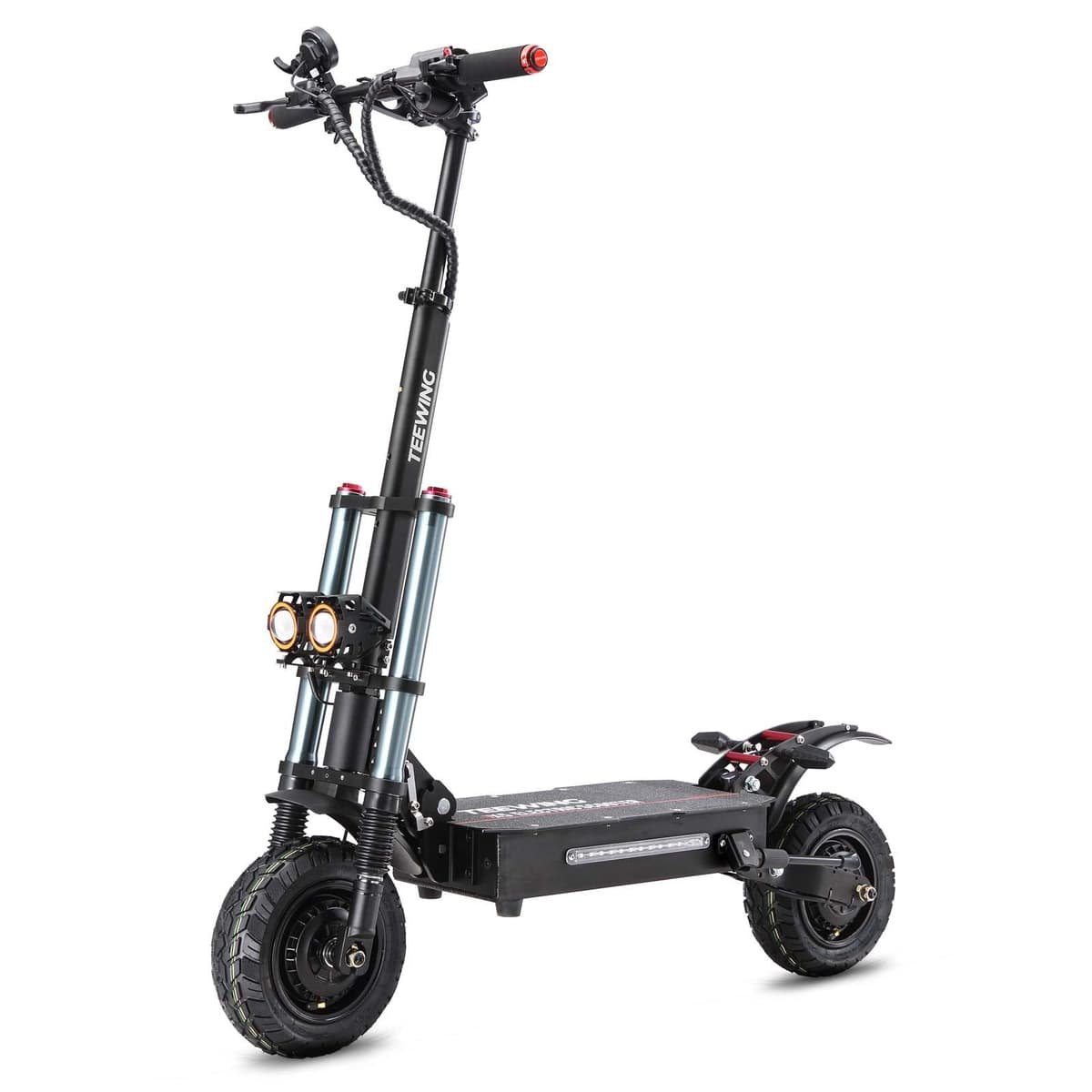
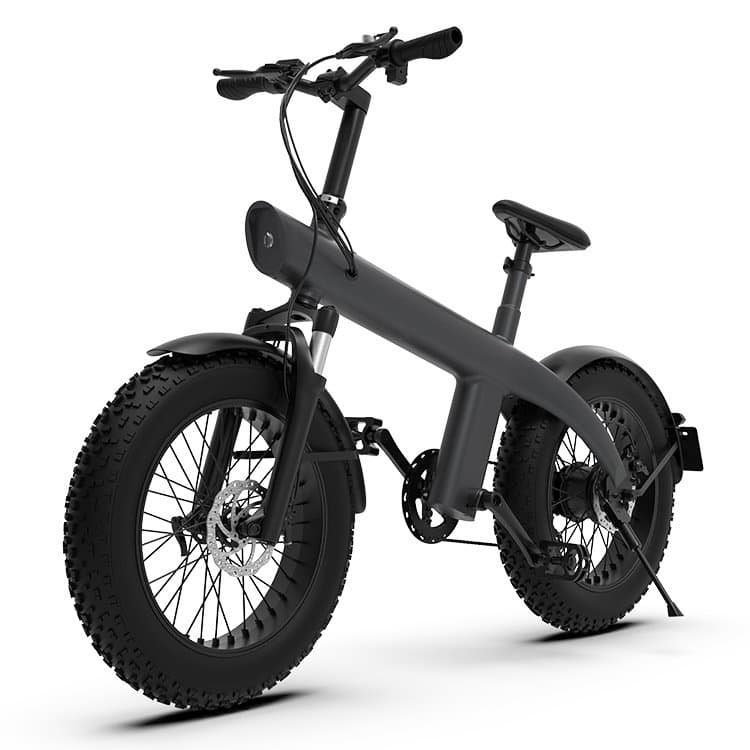
The weight limit on the spec sheet is where the search starts, not where it ends. Motor power, brakes, tires and deck size matter just as much.
The short answer
Pick a model whose maximum rider weight is at least 20% above what you weigh with your bag and gear. Look for 800 watts or more of motor power, or dual motors if you have hills, plus disc brakes, 10 inch or larger air filled tires, suspension and a wide deck. Expect less range and lower hill speed than the advertised figures, which are measured with a light rider.
The maximum rider weight is set by the maker, and it is a limit for the whole load. It reflects what the frame, stem, folding latch, suspension and brakes were designed and tested to carry. Your riding weight is you dressed for the weather, plus your bag, plus anything strapped on.
Most lightweight commuter models are rated for 220 to 265 pounds. Mid range models commonly go to 265 or 300 pounds. Heavy duty dual motor models are rated for 330 pounds and up, and a few go past 400. The figure is listed in the specifications on each product page.
Leave a margin of about 20%. At the limit, an electric scooter still works, but it accelerates slowly, brakes later, wears faster and bottoms out its suspension. A rider of 240 pounds will be much happier on a model rated for 300 than on one rated for 250.
Power is what gets a heavier rider up a hill. On flat ground nearly any motor will reach its top speed eventually. Hills show the difference.
Higher battery voltage helps too. A 52V or 60V system holds its power better under load than a 36V one.
| Model | Top speed (mph) | Range (miles) | Motor power (W) |
|---|---|---|---|
| Ausom DT2 Pro | 40 | 71 | 2,912 |
| Teewing X5 6000W | 55 | 75 | 6,000 |
| Teewing Z4 Pro 8000W | 55 | 65 | 8,000 |
| Yume Hawk | 43 | 43 | 4,000 |
| Teverun Fighter Supreme 7260R V5 | 74 | 124 | 15,000 |
Maker figures, checked September 2026. Real range and speed depend on rider weight, terrain, temperature and riding mode.
More weight takes more stopping, so look at the brakes before the top speed. Disc brakes on both wheels are the standard to look for. Hydraulic discs need less hand effort and stay consistent on long descents. Mechanical discs work well and are simple to adjust.
A single drum brake or an electronic brake alone is not enough for a heavier rider at speed. Electronic braking is a useful extra on top of two real brakes.
Comfort and control come from size. A deck at least 7 inches wide and 20 inches long lets you stand with one foot behind the other. A rear footrest gives you something to brace against under braking. Taller riders should check handlebar height, and a wide handlebar gives calmer steering.
A solid stem and a folding latch with a safety lock matter more as load goes up. On any electric scooter, check the latch for play every couple of weeks.
The advertised numbers come from a light rider. Most makers test with someone around 165 pounds. A rider of 250 pounds should plan on roughly half to two thirds of the advertised range, and a lower speed on hills. Buy a bigger battery than the trip seems to need.
Our guide to real world range shows how to estimate it for your own weight and route.
Browse the full electric scooter range, or read how to choose an electric scooter for the wider picture. If you want a second opinion on a model, call or email us and tell us your weight, your route and your hills.
Acceleration, braking and range all get worse, parts wear faster, and damage caused by overloading is normally not covered by warranty. Choose a model rated above your riding weight.
Not on flat ground, where a strong single motor is enough. On hills, or above about 265 pounds, dual motors make a clear difference.
They never go flat, but they give a harsher ride and less grip, and both get worse with more load. Air filled tires are the better choice.
It might. Many electric bikes carry 300 pounds or more and ride comfortably on larger wheels. See our comparison of electric scooters and electric bikes.
Splitting the cost can make sense, as long as you know which plans are interest free, which are not, and what you will have paid at the end.
Commuter models top out near 15 to 20 mph. The fastest ones pass highway speeds. Here is what each step up actually feels like and what it demands.
The range on the product page is measured on a test course, not on your commute. Here is how to turn that number into one you can plan around.
30+ brands and 200+ models, with free shipping to the 48 contiguous states. Stuck between two? Our AI assistant answers calls and texts any time at (240) 916-2471.