Front vs full suspension electric bike: which one your roads need
A front fork handles most city riding. Full suspension pays off on broken pavement, gravel and trails, at the cost of weight and upkeep. Here is how to choose.
Extra 10% off select rides with code RIDE10Ends Nov 1
On select Wilson's, DriveTron, Punk and JOYOR ridesOne code per order
Pay in 4 at 0% APRLearn more
Order by 2 PM ET · ships in 1–2 business days
14-day returnsSee the policy
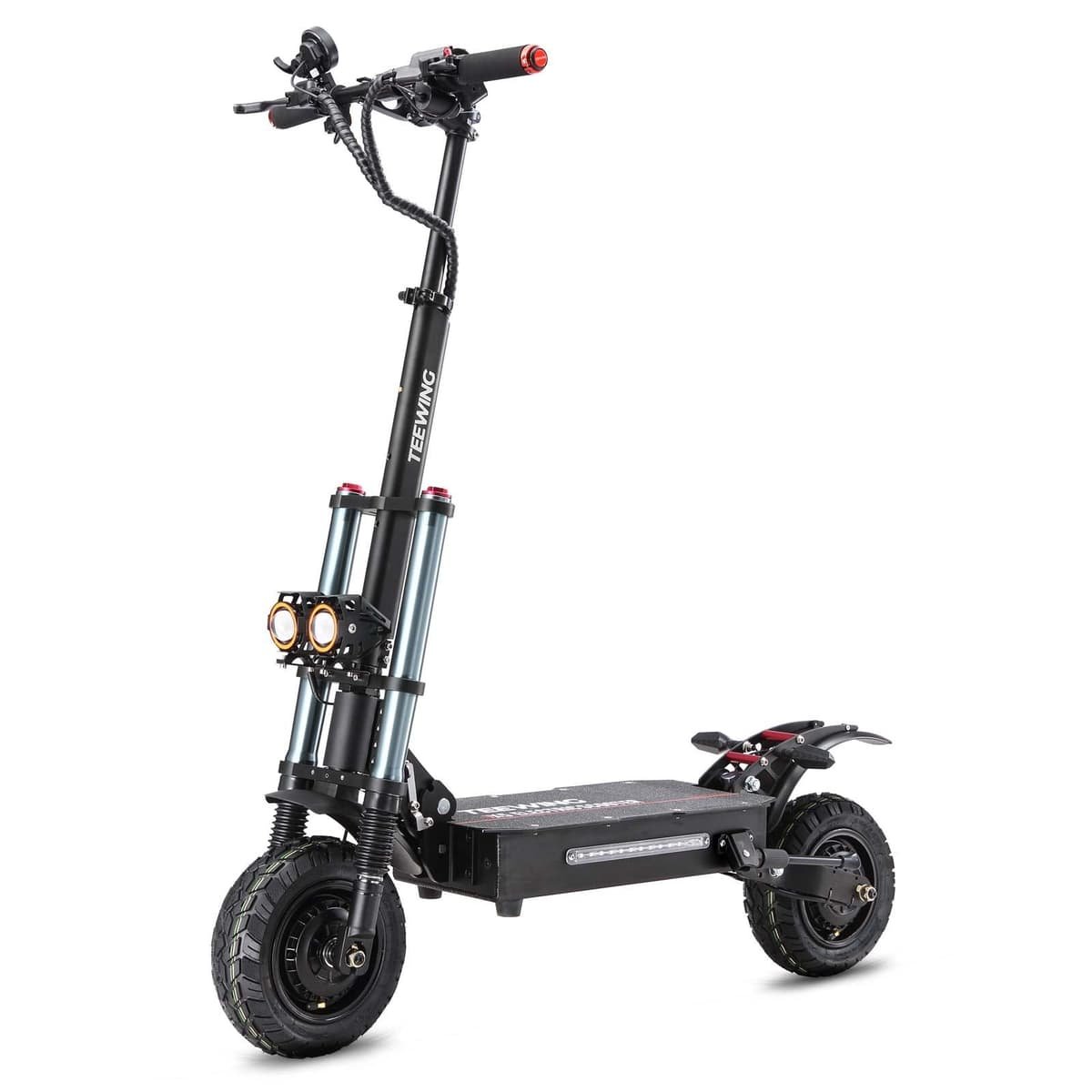
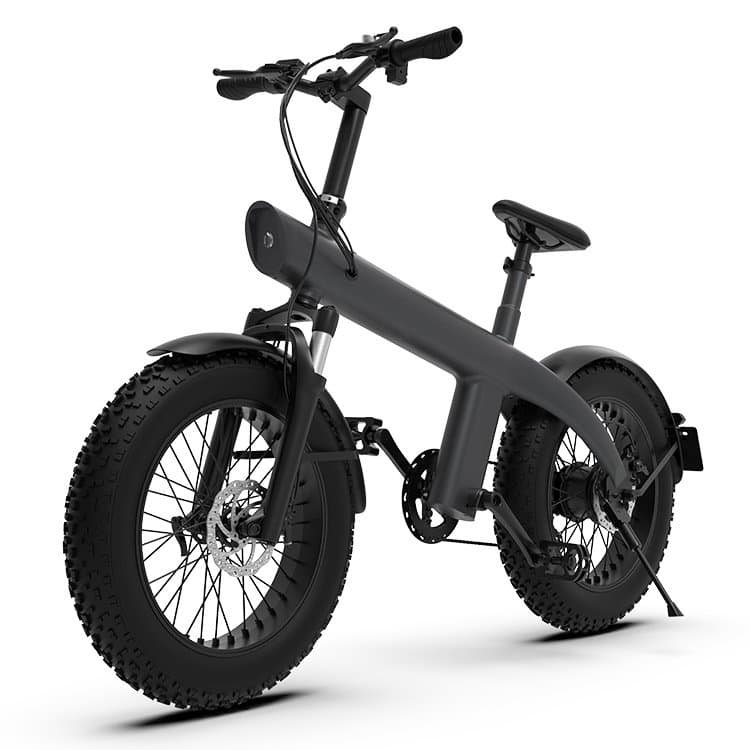
The deck is where you stand for every mile. Its length, width and height decide how steady the scooter feels, how easily you step on and what it clears.
The short answer
Electric scooter deck size comes down to length, width and height. A longer deck lets you stand with one foot behind the other, and a wider one gives room to shift your feet; both feel steadier at speed. Listed decks in our catalog run from 18.1 x 7.1 in on the KUKIRIN G2 Max to 22 x 8.9 in on the YUME XTRON and 23 x 12 in on the Hooga Daytona. A low deck is easy to step onto, while more ground clearance helps over curbs and trails. Match the deck to your stance, your shoe size and the riding you do.
You stand on the deck for every mile, so its shape changes how the whole scooter feels. A deck that fits lets you keep your knees soft and your weight centered, which makes bumps, braking and turns easier to handle. A deck that is too small leaves you perched with your feet together, which tires your legs and feels twitchy at speed.
Three measurements matter: length, for your stance; width, for foot room; and height, for stepping on and clearing obstacles. Not every maker publishes all three, so this guide uses only the figures each listing gives.
Most experienced riders stand with one foot slightly ahead of the other, angled a little, like on a skateboard. This staggered stance braces you under braking and over bumps. It needs a deck long enough for both feet, one behind the other.
A quick check at home: stand with your feet in your natural riding stance and measure from the back of your heel to the tip of your front toe. Compare that with the listed deck length, and leave a little margin. Tall riders with large feet should read electric scooters for tall riders, which covers deck length alongside handlebar height.
These models publish both deck length and width. The table adds each maker’s speed, range and motor figures for context.
| Model | Top speed (mph) | Range (miles) | Motor power (W) |
|---|---|---|---|
| KUKIRIN G2 Max Electric Scooter | 34 | 43 | 1,000 |
| KUKIRIN G2 Electric Scooter | 27 | 34 | 800 |
| KUKIRIN G3 Pro Electric Scooter | 40 | 49 | 2,400 |
| KUKIRIN G2 Master Electric Scooter | 37 | 43 | 2,000 |
| KUKIRIN G4 Electric Scooter | 43 | 43 | 2,000 |
| DriveTron Nova Dual Motor Electric Scooter | 46.8 | 50 | 2,800 |
| YUME XTRON Electric Scooter | 56 | 71 | – |
| Hooga Daytona 72V Electric Scooter | 72 | 40 | – |
Maker figures, checked September 2026. Real range and speed depend on rider weight, terrain, temperature and riding mode.
Width decides whether your feet fit side by side or only one behind the other. A narrow deck saves weight and keeps the scooter slim to carry. A wide one lets you stand with your feet side by side for a moment, shift your weight in turns and carry a bag between your feet.
Wide decks are common on seated scooters, where your feet rest flat in front of the seat. Our guide to electric scooters with seat covers that style.
Deck height is a trade off between stepping on and clearing obstacles. A low deck is easy to step onto, puts your weight low and feels stable. A higher deck, with more ground clearance, clears curbs, roots and potholes without scraping.
Shorter riders often prefer a lower deck that is easier to step onto; see electric scooters for short riders. For trail riding, read off-road electric scooters.
The deck surface keeps your feet planted when the road is wet or rough. The NANROBOT X8 uses a non-slip silicone deck, the NANROBOT X10 an anti-slip deck and the Gyroor C1 a non-slip deck. Keep the surface clean, and replace worn grip as the maker’s manual describes.
A kicktail or footrest at the back gives your rear foot something to brace against under hard acceleration. Dualtron builds the brake lights into the kicktail on the Storm and into the footrest on the Victor Luxury and Thunder 3, and the Hooga Daytona adds a kick plate that stretches its deck to 29 in.
Never stand on a folded stem latch, deck lights or the battery cover, and never drill or cut a deck. Many scooters carry the battery inside the deck. Damage there belongs with a qualified technician; see our warranty page for covered faults.
A bigger deck usually comes with a bigger scooter. The longest decks in our list sit on the heaviest models: the YUME XTRON weighs 116.6 lb and the Hooga Daytona 152 lb. The KUKIRIN G2, with an 18.1 in deck, weighs 57 lb.
So choose the smallest deck that fits your stance comfortably, unless you ride fast or off-road and want the extra room. If you will carry the scooter, weight matters more than a few extra inches of deck. Wheel size changes stability too, so read our electric scooter wheel size guide alongside this one.
For more on fit, read our sibling guides to the electric scooter for women, which sorts models by weight, height and seat, and electric scooter throttle types.
Browse every model in our range of electric scooters, or by maker on KUKIRIN electric scooters and YUME electric scooters. Models priced at $2,000 or less, such as the KUKIRIN G4 and DriveTron Nova, can use Pay in 4 at 0% APR; above $2,000, such as the YUME XTRON, choose a monthly plan with Affirm, subject to approval.
For most adults, a deck of about 18 in long and 7 in wide fits a relaxed staggered stance. Fast riders, tall riders and riders with large feet often prefer 20 in or more.
A wider deck gives more foot room and lets you shift your weight in turns, which many riders find steadier. Stability also depends on wheel size, suspension and wheelbase.
Among models that list deck size in our catalog, the Hooga Daytona has the largest at 12 x 23 in, or 29 in with its kick plate, followed by the YUME XTRON at 22 x 8.9 in.
Stand in your riding stance on the floor and measure from the back of your rear heel to the tip of your front toe. Compare that with the listed deck length and leave a little room.
A front fork handles most city riding. Full suspension pays off on broken pavement, gravel and trails, at the cost of weight and upkeep. Here is how to choose.
A 52V battery gives a little more punch than a 48V one at the same current, but range comes from watt hours, the speed cap stays the same and the whole system has to match.
A 750 W motor pulls harder up hills and away from lights than a 500 W motor, but it does not raise the speed limit, and torque often tells you more than watts.
30+ brands and 200+ models, with free shipping to the 48 contiguous states. Stuck between two? Our AI assistant answers calls and texts any time at (240) 916-2471.