Electric bike tire pressure: reading the sidewall range, fat tires and flats
There is no single number for every e-bike. The right pressure sits inside the range on your tire, and where you set it depends on your weight, your tires and where you ride.
Published Oct 11, 20267 min read
PSI
The short answer
The right electric bike tire pressure sits inside the range printed on the tire sidewall. Start near the middle, move toward the top for a heavier load or smooth pavement, and toward the bottom for grip on dirt, sand or snow, never outside the range. Fat 4 inch tires run at far lower pressure than narrow commuter tires, so use a gauge that reads low numbers accurately. Check every week, with the tires cold.
The sidewall range is the rule. The maximum is a limit, not a target.
Fat tires hold a lot of air at low pressure, so a few PSI change the ride a lot.
Heavier riders, cargo and pavement call for the upper half of the range.
Weekly checks prevent most pinch flats and protect your range.
Why pressure matters more on an electric bike
An electric bike puts more weight on its tires than a regular bicycle. The Hiboy EX9 weighs 59.5 lb, the Segway MUXI Pro 82.2 lbs and the Hiboy EX11 99.2 lbs before you add a rider or cargo. All of that rests on two contact patches, and the motor adds force every time you pull away.
Too soft and the tire squirms in corners, the rim can pinch the tube on a pothole, and the extra drag costs you miles. Our guide to electric bike range lists soft tires among the things that drain the battery.
Too hard and the tire skips over bumps, grips less in the wet and shakes the bike and you.
Just right and the bike steers cleanly, brakes well and rolls with less effort.
Reading the sidewall
Every air filled tire has its pressure range molded into the sidewall, usually as a minimum and maximum in PSI, and often in bar or kPa as well. One bar is about 14.5 PSI, and 100 kPa equals one bar. If your manual gives a recommended pressure, use it. Otherwise, start in the middle of the sidewall range and adjust from there.
The size is printed there too, such as 26 x 4.0 or 27.5 x 2.4. Any replacement tire needs the same size.
Read both tires. Front and rear are often the same model, but not always.
Never go above the maximum. An overinflated tire can lift off the rim or burst.
Never go below the minimum. The tire can roll on the rim in a corner, and the tube is easy to pinch.
Fat tire pressure
A fat tire works by holding a large volume of air at low pressure. That lets it spread out over sand, snow and broken pavement for grip and comfort. It also means a few PSI make a big difference, so a gauge that reads low numbers accurately matters more than on any other tire. Many floor pump dials are built for high pressures and read loosely near the bottom of the scale, so a separate digital gauge is worth having.
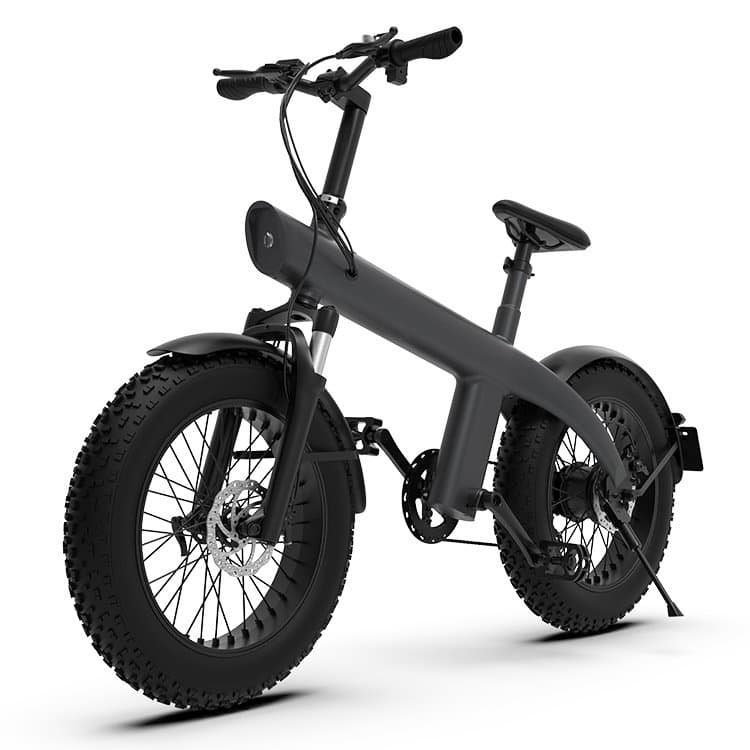
On pavement, run fat tires in the upper part of the sidewall range. They roll easier and the steering feels lighter. On sand, snow or loose dirt, drop toward the lower part for more grip. If the rim knocks on bumps or the tire folds in corners, add air. Our guide to fat tire electric bikes covers who these tires suit.
The AOTOS FLUX X26 Pro lists tire pressure monitoring, which shows the pressure on the display. It makes a soft tire easy to spot, and a hand gauge is still useful for setting the exact number.
Commuter and mountain tires
Narrower tires hold less air and run at higher pressure than fat tires. The Hiboy EX9 rides on 26 x 2.5 inch tires, the Segway Myon on 27.5 x 1.95 inch, the NAVEE Wolf X on 27.5 x 2.4 inch Kenda tires and the Gyroor EB263 on 26 x 1.95 inch off-road tires. In between sit the 20 x 3.0 inch multi-surface tires on the Segway MUXI and MUXI Pro, and the Kenda 26 x 3.0 inch tires on the Segway Xafari.
Folding bikes with small wheels, such as the 14 inch air tires on the Hiboy C1 and the Gyroor C33, hold so little air that they lose pressure faster in relative terms. Check them at least weekly.
Setting it for your weight, load and ride
Stay inside the sidewall range and move within it to suit how you ride.
Heavier riders and cargo: toward the upper end. The Segway MUXI Pro lists a 418 lbs total payload with up to 121 lbs on the rear rack, and the ASAP Zen lists a 440 lbs max load. Loads like those need firm tires. More in electric bikes for heavy riders.
Rear vs front: on most e-bikes the rear tire carries more weight, from the rider, the rack and often a rear hub motor. Many riders run the rear a little higher than the front.
Smooth pavement: the upper half rolls easiest and stretches your range.
Gravel, dirt and grass: a little lower for grip and comfort.
Cold weather: pressure falls as the temperature drops, so check after a cold snap.
How to check and pump
Check every week and before long rides, with the tires cold. A tire warmed by riding reads higher.
Find your valve type. Most e-bike tires use a Schrader valve, the car type. Some use a Presta valve, the thin type with a small lock nut on top. Your pump head has to fit.
Press the gauge or pump head straight onto the valve until it stops hissing, and read the pressure.
Add air in short bursts and check as you go. Gas station air lines fill low pressure fat tires very quickly.
Pull the head off straight, check once more and refit the valve cap.
A floor pump with a gauge is the easiest tool at home. For the road, the E-TWOW air compressor pump stops by itself at the pressure you set and comes with adapters for bike and car valves. Our electric scooter tire pressure guide walks through valves and pumps in more detail.
Flats and when to replace a tire
Correct pressure prevents most pinch flats, where a soft tire lets the rim cut the tube on a pothole or curb edge. For punctures, stay out of the gutter where glass and wire collect, and pick stones out of the tread when you check the pressure. Puncture-resistant tires help: Hiboy lists them on the EX11, and NANROBOT lists puncture-resistant 27.5 inch tires on the Q5.
A rear wheel with a hub motor takes longer to remove than a regular bicycle wheel, because of the axle nuts and the motor cable. Power off, follow the maker manual, and if you are unsure, have a bike shop do it. Leave anything involving the motor cable or wiring to a qualified technician. If a tire or wheel fault may be covered, check our warranty page before any repair.
Replace a tire when the tread is worn flat, the rubber is cracked, or the sidewall has a cut or bulge. Use the size the maker lists. If you are not sure which tire or tube fits your model, contact us.
Fat tire and commuter electric bikes in our catalog. Each product page lists the tire size.
Use the range printed on your tire sidewall. It differs by tire size and type, and 4 inch fat tires run far lower than narrow commuter tires.
Should the front and rear tire have the same pressure?
They can, but the rear usually carries more weight on an e-bike, so many riders run it a little higher, always inside the sidewall range.
How often should I check e-bike tire pressure?
Every week, before long rides, and after big temperature changes.
Can I use a car tire pump on an e-bike?
On a Schrader valve, yes, but car pumps and gas station lines move a lot of air fast. Use short bursts and check with your own gauge, especially on low pressure fat tires.
Why do my fat tires feel soft at the right pressure?
Fat tires are designed to flex at low pressure for grip and comfort. If the rim knocks on bumps or the tire folds in corners, add air within the sidewall range.
Sag is the first setting that makes adjustable suspension work for your weight. Here is how to measure it with a tape and a friend, what preload, compression and rebound do, and where home setup should stop.
Tire pressure changes grip, comfort, range and flats more than any other quick adjustment. Here is how to find and set it, how to read a dirt bike tire size, and the sizes our bikes use.
A safe charging routine, the charge times each maker lists, why many quote 20% to 80%, how to match the charger, and what to do if a battery looks or smells wrong.
Oct 11, 20267 min read
Ready to look at models?
Shop the rides
30+ brands and 200+ models, with free shipping to the 48 contiguous states. Stuck between two? Our AI assistant answers calls and texts any time at (240) 916-2471.